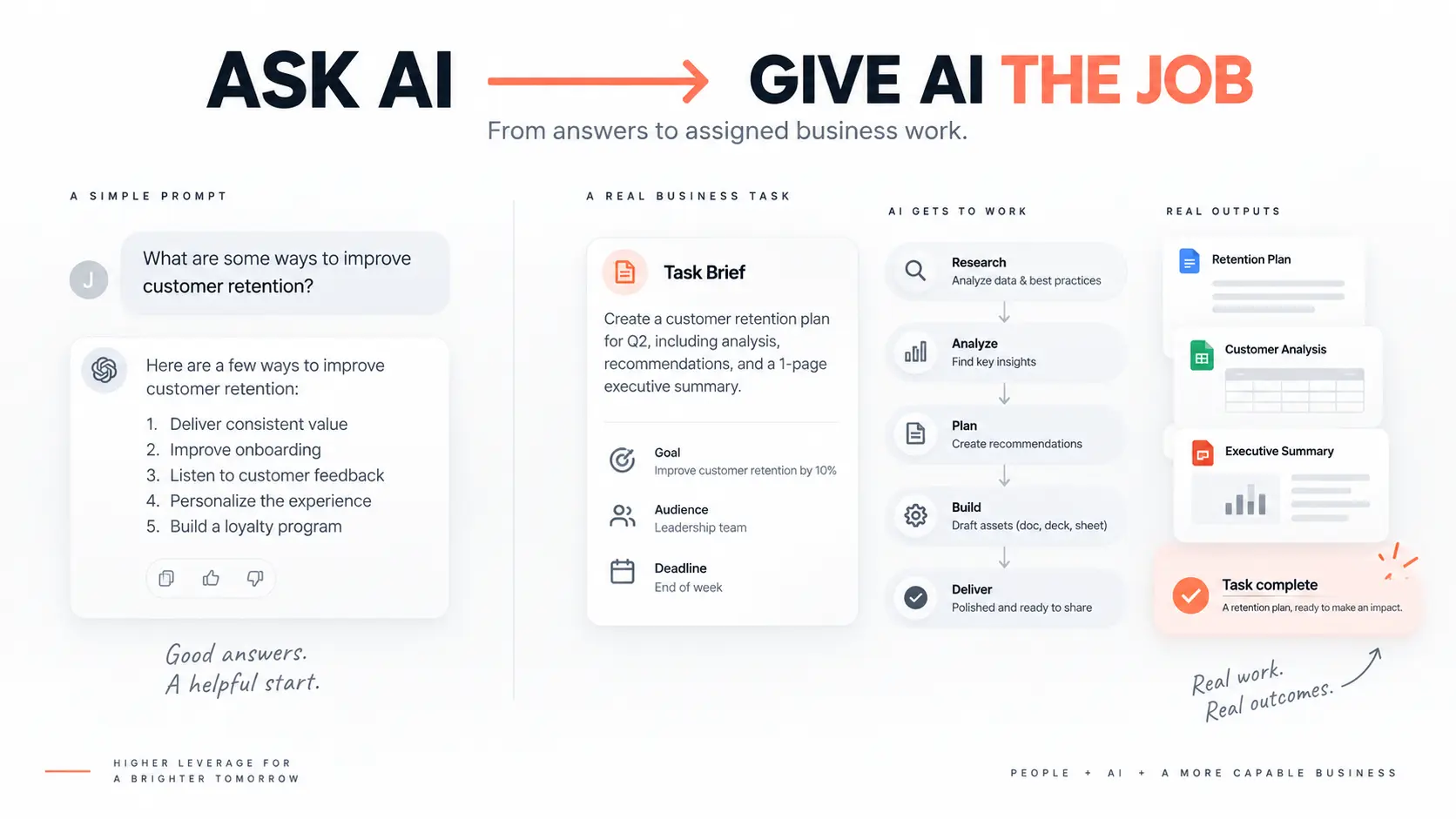
For the last few years, using AI at work has often looked like this:
You do the job. ChatGPT helps with pieces of it.
You research the market, then ask AI to summarize your notes.
You inspect the spreadsheet, then ask AI to explain a few numbers.
You conduct the sales call, organize the notes, decide what to propose, then ask AI to draft the proposal.
You browse 20 prospect websites, collect information, paste it into a spreadsheet, then ask AI to rank the companies.
Useful? Yes.
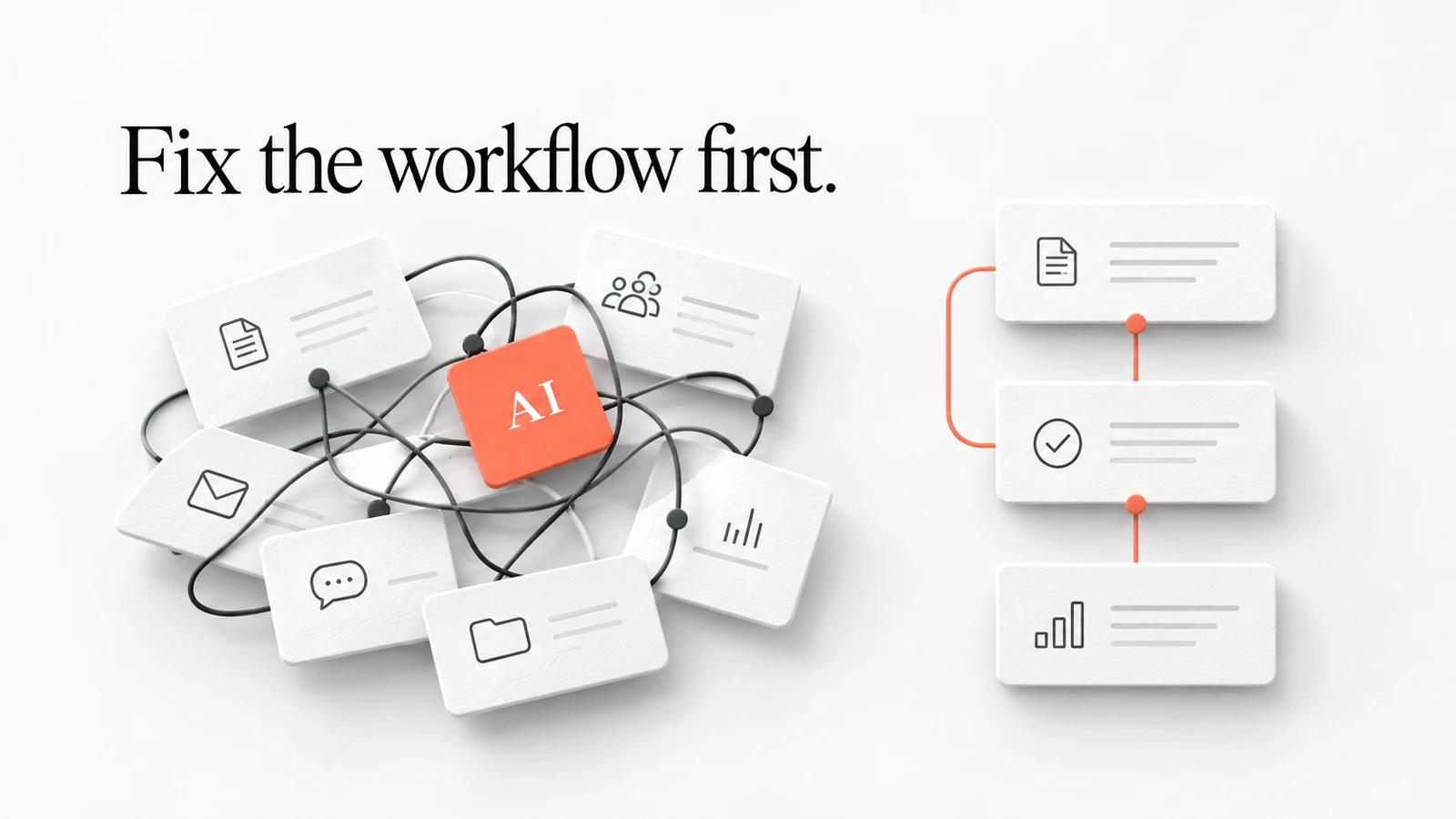
But the human is still orchestrating nearly every step.
OpenAI's new GPT-6 Astra points toward a different model:
Give the AI the objective, context, tools, rules and boundaries, then let it carry more of the assignment from beginning to end.
That distinction matters.
Astra is not interesting because AI suddenly learned how to write emails, summarize documents or research competitors. Existing AI systems already do those things.
What makes Astra more consequential is the combination of:
- complex reasoning
- web browsing
- computer use
- long, multi-step execution
- coding
- document, spreadsheet and presentation creation
- tool use
- the ability to adjust while work is underway
OpenAI describes GPT-6 Astra as its most capable model for difficult end-to-end work and says it sets a new frontier in computer and browser use. It can fill online forms, update CRM records, organize calendars, conduct research, work in document editors, analyze data, build websites, run frontend QA and troubleshoot software on screen.
That means the useful business question is no longer:
“What should I ask Astra?”
A better question is:
“What job should I give Astra?”
Here are 15 worth considering.
First: What Actually Makes Astra Different?
Before the examples, this distinction is important.
Imagine you need a competitive analysis.
Typical AI workflow
You:
- find the competitors
- collect the URLs
- search each company
- copy important information
- upload it
- ask AI to summarize it
- ask for a comparison
- ask for recommendations
- copy the results into a document
- format the final report
AI helped.
But you managed the workflow.
Astra-style workflow
You provide:
- the business objective
- your company context
- competitor criteria
- access to the relevant tools
- the required deliverable
- rules about what it may and may not do
Then assign:
Research our eight major competitors. Review their websites and relevant public sources. Compare their positioning, products, pricing where available, reviews, customer segments, recent developments and major strengths. Identify gaps we could credibly exploit. Produce the analysis using our competitive-intelligence template, create the supporting comparison table and flag anything you could not verify.
The model works through the assignment.
That is the shift:
AI-assisted task → AI-executed workflow
Not every workflow will work perfectly. Not every job belongs with an AI.
But this is the direction Astra is built around.
1. Give Astra an Entire Market-Research Assignment
Most AI research starts with a question.
Try giving Astra a decision instead.
Instead of:
Tell me about the senior-care market in Florida.
Give it the job:
Determine whether expanding our senior-care business into Southwest Florida deserves further investment.
Research market demand, demographics, major competitors, service offerings, customer concerns, pricing where publicly available, regulatory considerations, market growth, local search behavior and barriers to entry.
Separate verified facts from inference.
Compare Sarasota, Charlotte, Lee and Collier counties.
Produce:
- an executive recommendation
- supporting evidence
- a competitor matrix
- major uncertainties
- three opportunities worth further investigation
- reasons we should not enter the market
Do not contact any companies or make purchases.
That is a much more useful assignment than “research this market.”
Where the value comes from
Astra can potentially:
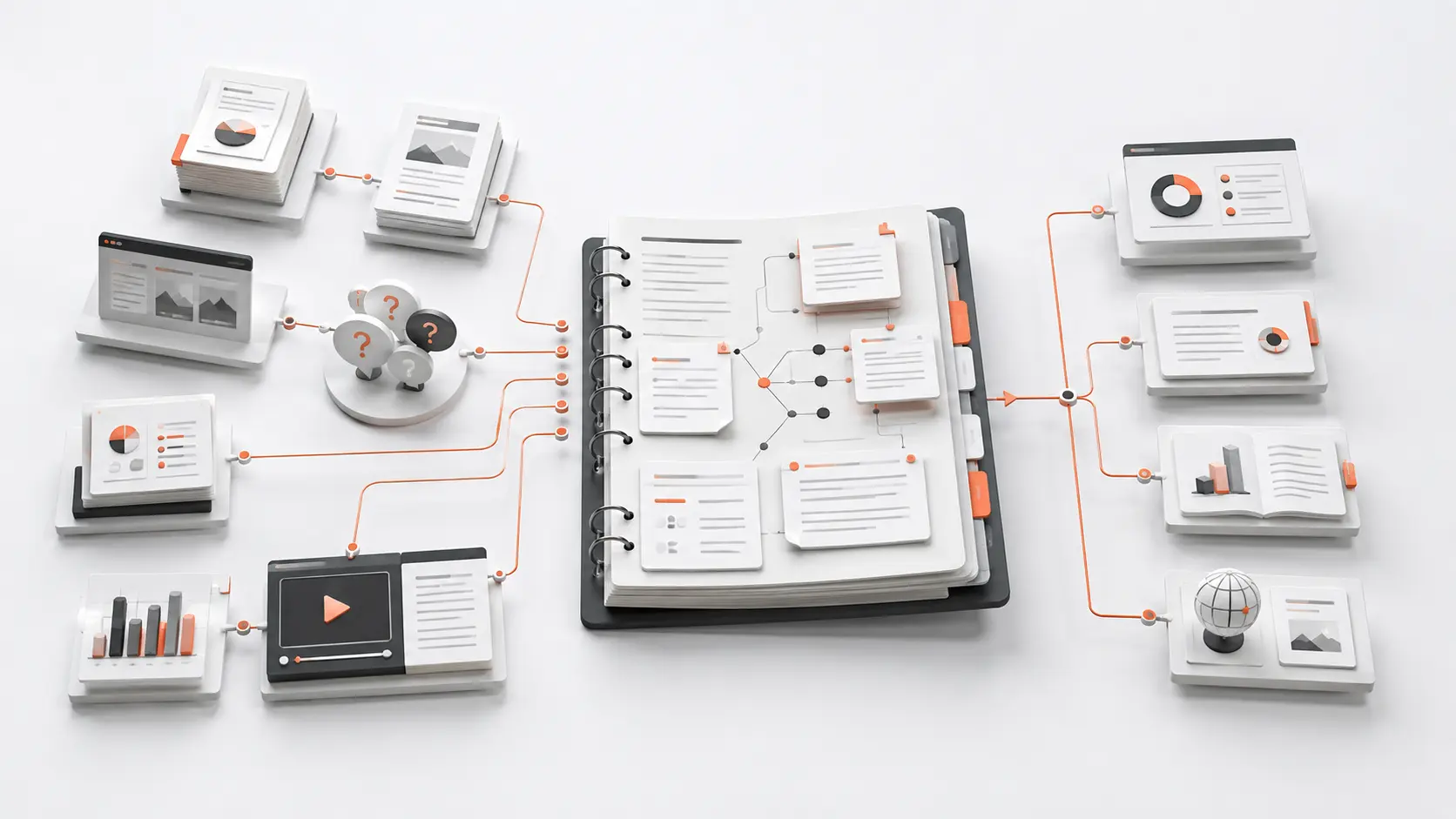
browse → investigate → compare → reason → build the analysis → produce the deliverable
instead of requiring you to manage each step manually.
Best for: founders, strategy teams, consultants, product teams, investors, business-development teams.
2. Build a Real Competitive-Intelligence Brief
Companies often know who their competitors are.
They understand them far less well.
Give Astra a recurring intelligence job.
Assignment
Every competitor must be evaluated across:
- positioning
- target customers
- major offerings
- pricing where public
- website messaging
- customer reviews
- complaints
- leadership
- hiring
- partnerships
- new products
- geographic expansion
- recent announcements
Compare the findings against our company.
Identify:
- where competitors have a stronger customer proposition
- where several competitors are becoming similar
- where customers appear underserved
- where we have a defensible advantage
- what changed since the previous review
Now it becomes a competitive-monitoring process, not a one-time SWOT exercise.
The valuable output is not “Competitor X has good branding.”
It is:
Something changed in the market. Here is why leadership should care.
3. Turn Prospecting Into an Intelligence Workflow
Most sales teams waste time researching weak prospects.
Astra could potentially perform a deeper first pass.
Suppose your ICP is:
- 25–300 employees
- research-heavy purchase
- meaningful contract value
- active growth signal
- visible need your company could credibly address
Instead of manually researching 100 companies:
Give Astra the job
Research these 100 companies.
For each company:
- verify company size where possible
- identify its primary business
- identify relevant decision-makers
- review recent hiring activity
- look for expansion, funding, leadership changes, launches or other buying signals
- evaluate its website against our qualification criteria
- identify one observable reason the company may be worth contacting
- distinguish facts from assumptions
Score each company against our ICP.
Create detailed briefs only for the strongest 15.
Do not contact anyone.
Then the human starts here:
15 researched opportunities
instead of:
100 browser tabs.
That is a meaningful difference.
4. Build the Sales-Meeting Brief for You
A strong account executive may spend 30–60 minutes preparing for an important call.
That work can involve:
- website research
- company news
- previous emails
- CRM notes
- leadership changes
- product information
- job postings
- competitor activity
Give Astra those inputs.
Assignment
Prepare me for tomorrow's meeting with Company X.
Review:
- the company website
- recent company announcements
- relevant leadership
- our CRM notes
- previous emails
- the original inquiry
- relevant hiring activity
Produce a two-page meeting brief containing:
- what the company does
- what appears to matter to leadership right now
- why they may be speaking with us
- what we know
- what we are assuming
- likely objections
- five questions I need answered
- topics I should not prematurely prescribe solutions for
That last instruction is important.
Good AI delegation is not:
“Tell me what to sell them.”
It is:
“Help me enter the conversation better prepared.”
5. Turn the Meeting Into Execution Before Everyone Forgets
This is one of my favorite use cases because it addresses something mundane and expensive.
Meetings produce:
- decisions
- promises
- tasks
- follow-ups
- unanswered questions
Then everyone goes back to work.
Give Astra the post-meeting job
Process this meeting.
Identify:
- decisions
- commitments
- action items
- owner of each action
- deadlines
- dependencies
- unresolved questions
- risks
Then:
- update the project tracker
- prepare the client follow-up
- create tasks
- draft the next meeting agenda
- flag conflicting commitments
Do not send external communications without approval.
Now AI doesn't merely tell you what happened.
It helps translate conversation into operational follow-through.
6. Turn a Discovery Call Into a Near-Finished Proposal
This is especially valuable for:
- consultants
- agencies
- professional services
- contractors
- B2B service businesses
Give Astra:
- discovery transcript
- service catalog
- pricing framework
- proposal template
- scope rules
- exclusions
- previous approved proposals
Assignment
Review the discovery conversation.
Identify the problems the prospect actually described.
Do not infer needs that were not discussed without labeling them as hypotheses.
Determine which of our existing engagement types best fits the situation.
Prepare:
- recommended scope
- deliverables
- exclusions
- client responsibilities
- timeline
- pricing using our approved rules
- assumptions requiring approval
Create the proposal using our standard template.
Do not invent guarantees, performance claims or commitments.
The human still decides whether to sell the engagement.
But the distance between:
“Good call.”
and
“Proposal ready for review.”
gets much shorter.
7. Give Astra a Messy Spreadsheet and Tell It to Investigate
AI already analyzes spreadsheets.
The more powerful use is to give it an investigation mandate.
Example
Determine why profitability declined this quarter.
Use these sales, payroll, vendor, marketing and operating-expense files.
Investigate:
- revenue changes
- pricing
- customer mix
- gross margin
- labor costs
- vendor expenses
- marketing spend
- refunds
- unusual transactions
Do not assume correlation proves causation.
Create:
- a variance analysis
- supporting tables
- visualizations
- the five most plausible explanations
- evidence for and against each explanation
- questions management must answer before reaching a conclusion
That's not:
“Explain my spreadsheet.”
It is:
“Investigate a business problem using the available evidence.”
8. Give It the Monthly Reporting Job
Reporting is one of those jobs that can consume hours without necessarily requiring hours of senior judgment.
Give it:
- GA4
- Search Console exports
- sales data
- CRM data
- advertising reports
- previous monthly report
- company KPI definitions
Assignment
Produce the August executive performance report.
Compare:
- month over month
- year over year
- actual vs target
Identify material changes.
Investigate anomalies where sufficient evidence exists.
Update the reporting spreadsheet.
Create the required charts.
Prepare the executive presentation using our approved template.
For every significant claim, identify the supporting data.
Clearly flag anything where causation cannot be established.
Human review remains important.
But you stop paying senior people to resize charts and copy numbers between applications.
9. Have Astra Actually Use Your Website
This is where Astra gets much more interesting than a normal “review my homepage” prompt.
Instead of giving it screenshots, give it a journey.
Example: professional-service website
Act as a prospective customer trying to determine whether this company can solve your problem.
Start from Google/the homepage.
Attempt to:
- understand what the company does
- determine whether it serves your situation
- find relevant proof
- compare services
- understand the process
- find pricing information if available
- locate the appropriate contact path
- submit the test form
Record:
- confusion
- dead ends
- broken functionality
- contradictory information
- trust gaps
- unnecessary friction
Prioritize findings according to their likely effect on the customer's ability to find, understand, trust and choose the company.
That becomes AI-assisted journey testing.
Not a replacement for humans.
Another layer.
10. Give Astra the QA Job After a Website Release
A website developer finishes a release.
Normally somebody still has to test:
- navigation
- buttons
- forms
- responsive layouts
- links
- validation
- workflows
- pages
- errors
Assignment
QA this release against the supplied acceptance criteria.
Test:
- desktop
- tablet
- mobile
- navigation
- contact forms
- required links
- important CTAs
- core customer workflows
For each defect:
- reproduce the issue
- record the steps
- explain expected behavior
- explain observed behavior
- assign severity
- capture supporting evidence
After fixes are made, retest affected workflows.
This is the kind of work that makes the phrase “AI agent” less abstract.
11. Turn Tribal Knowledge Into an Operating System
A surprising amount of business risk exists because:
“Ask Maria. She knows how that works.”
Give Astra:
- interviews
- meeting recordings
- existing SOPs
- screenshots
- checklists
- process documents
- examples of completed work
Assignment
Reconstruct the complete client-onboarding process.
Identify:
- current steps
- responsible people
- systems used
- required inputs
- decision points
- exceptions
- inconsistencies
- undocumented knowledge
Then produce:
- current-state workflow
- identified problems
- proposed simplified workflow
- detailed SOP
- responsibility matrix
- QA checklist
- exception-handling guide
- training version for new employees
Now one person's memory becomes company infrastructure.
That can be worth far more than saving 20 minutes writing an email.
12. Give It the “Figure Out Why Customers Are Leaving” Job
Businesses accumulate customer evidence everywhere:
- support tickets
- cancellations
- surveys
- reviews
- sales calls
- CRM notes
- emails
- churn data
Assignment
Determine the strongest recurring reasons customers leave.
Analyze:
- cancellation surveys
- customer-support tickets
- negative reviews
- call transcripts
- NPS comments
- CRM notes
- account history
Cluster issues into themes.
Quantify prevalence where the data allows.
Separate:
- product problems
- expectation gaps
- service failures
- pricing objections
- onboarding problems
- customer-fit issues
Identify the three churn drivers with the strongest evidence and propose experiments to test possible solutions.
That is a substantially better assignment than:
“Summarize these customer comments.”
13. Have Astra Reconcile Contradictory Company Information
This is one businesses rarely think about.
Companies accumulate contradictory information everywhere:
- website
- PDFs
- sales decks
- help center
- pricing pages
- product documentation
- contracts
- old proposals
- FAQs
- internal knowledge bases
Give Astra the job:
Audit our current company information for contradictions.
Compare:
- website
- sales collateral
- product documentation
- customer-support materials
- pricing documents
- onboarding materials
Find conflicting:
- pricing
- features
- service descriptions
- policies
- terminology
- promises
- timelines
- contact information
Determine which source appears authoritative where possible.
Do not silently resolve conflicts.
Produce a remediation register showing:
- contradiction
- affected source
- business risk
- recommended owner
- required decision
For a growing company, that could prevent sales problems, customer confusion and reputational damage.
14. Give Astra a Deliverable, Not a Blank Page
Imagine telling it:
Prepare the board presentation.
And supplying:
- monthly financials
- board deck template
- last three decks
- KPI definitions
- strategy memo
- current issues
- supporting research
A good assignment would specify:
Use our existing board template.
Do not change established KPI definitions.
Identify what changed since the previous meeting.
Include only material information.
Highlight:
- performance
- major risks
- decisions required
- unresolved issues
- next-quarter priorities
Create supporting charts from the underlying data.
Flag any number that cannot be independently reconciled.
Now the AI's job isn't:
Write slide bullets.
It is:
Produce the first complete version of the board package.
15. Build a Workflow That Keeps Working After You Close ChatGPT
This is probably the biggest long-term implication.
Astra can also be used through the OpenAI API, where it supports tools including:
- web search
- file search
- computer use
- code interpreter
- hosted shell
- function calling
- MCP integrations
That means a company could eventually build workflows such as:
New qualified lead arrives
Trigger
New form submission.
Astra
→ verifies company → researches account → checks qualification criteria → gathers relevant signals → prepares account brief → updates approved CRM fields → recommends next action → flags uncertain information
Human
Approves outreach.
Weekly competitive intelligence
Trigger
Friday morning.
Astra
→ checks monitored competitors → reviews meaningful changes → investigates announcements → compares against previous state → updates intelligence file → produces leadership brief
Human
Reviews only meaningful developments.
New client onboarding
Trigger
Contract executed.
Astra
→ validates required information → creates project structure → analyzes submitted materials → identifies missing inputs → prepares internal brief → generates kickoff agenda
Human
Reviews before kickoff.
That is where Astra becomes more than “a smarter chatbot.”
It becomes part of the business operating system.
The High-Value Skill Is No Longer Prompt Engineering
There will still be prompt guides.
But businesses may need a more important capability:
Work design
Before handing a job to Astra, define these nine things.
1. Outcome
What business result should exist when the work is finished?
Bad:
Research competitors.
Better:
Determine where our competitive positioning is weakest and identify three credible areas for differentiation.
2. Context
What should Astra know about the business?
Provide:
- company
- product
- customers
- market
- constraints
- goals
3. Inputs
What evidence should it use?
Examples:
- website
- internal files
- spreadsheets
- CRM
- transcripts
- external research
- previous deliverables
4. Authority
Which source wins when information conflicts?
For example:
Current pricing database overrides old proposals.
Without this, AI can confidently reconcile information that shouldn't have been reconciled.
5. Work Plan
What must actually happen?
Don't prescribe every mouse click.
Define the essential work.
6. Decision Rules
How should Astra decide what matters?
Examples:
A qualified account must have at least 50 employees, sell a high-consideration service and exhibit at least one verified growth signal.
Or:
Flag any financial variance greater than 10% or $25,000.
Good delegation requires rules.
7. Deliverable
What does “done” look like?
A:
- spreadsheet?
- CRM update?
- memo?
- presentation?
- recommendation?
- completed workflow?
“Analyze this” is not a deliverable.
8. Permissions
What can Astra change?
Explicitly define:
Can do without asking
and
Must ask before doing
This becomes extremely important once AI can operate software.
9. Verification
How will the result be checked?
Specify:
- calculations to verify
- facts requiring sources
- changes requiring approval
- uncertainty thresholds
- exceptions requiring escalation
That is how you turn AI use from experimentation into an operating process.
A Copyable Astra Job Brief
Here is a template a business can use immediately.
JOB
Your assignment is to:
[Define the finished business outcome.]
BUSINESS CONTEXT
You need to understand:
[Company, customer, product, market and constraints.]
SOURCES
Use:
[Files, websites, systems, datasets and approved research sources.]
When sources conflict, use this authority order:
[Define authoritative sources.]
WORK TO COMPLETE
Complete the work required to:
[Describe essential workflow.]
DECISION RULES
Evaluate findings according to:
[Criteria.]
DELIVERABLE
When finished, produce:
[Exact final output.]
PERMISSIONS
You may:
[Allowed actions.]
You must obtain approval before:
[Restricted actions.]
EVIDENCE
Distinguish clearly between:
- verified facts
- supported conclusions
- assumptions
- unresolved questions
QUALITY CHECK
Before completing the assignment:
- verify important calculations
- check required sources
- identify missing information
- flag contradictions
- confirm the deliverable meets the requirements
ESCALATION
Stop and ask for human judgment if:
[Define consequential decisions.]
Save that.
The better Astra gets, the more valuable a good job brief becomes.
The Three Levels of AI Delegation
Businesses also need a way to decide how much control to hand over.
Level 1: Research and Recommend
AI can:
- research
- analyze
- compare
- create
- recommend
But it cannot change anything externally.
Example:
Research 50 prospects and recommend the best 10.
This is where many companies should start.
Level 2: Prepare and Stage
AI can perform work inside approved systems, but consequential action still requires approval.
Example:
Research the prospect, enrich the record and prepare the email draft. Do not send it.
This can remove substantial manual labor without surrendering important decisions.
Level 3: Execute Within Guardrails
AI may complete predetermined low-risk actions autonomously.
Example:
Update these approved CRM fields when confidence exceeds 95%. Send uncertain records to the review queue.
The question isn't:
“Can Astra technically do this?”
It is:
“Should Astra be authorized to do this?”
Those are not the same thing.
Four Jobs You Should Not Hand Astra Unsupervised
More capable models make restraint more important, not less.
Be especially cautious around:
Money
Payments, purchases, refunds, investments and material financial commitments.
People
Hiring, firing, disciplinary decisions and sensitive communications.
Legal and regulatory decisions
AI may assist research and analysis. Consequential interpretation should receive appropriate professional review.
Irreversible actions
Deleting data, changing access, modifying production systems or publishing high-impact material.
Don't Pay Astra to Do a Five-Cent Job
There is another side to this.
Not every task deserves the most capable model.
You probably do not need Astra to:
- rewrite an email
- summarize three paragraphs
- generate subject lines
- classify straightforward records
- clean simple text
- brainstorm names
Use cheaper models for high-volume, predictable work when they perform well enough.
Use Astra where:
better reasoning + computer use + longer workflows + higher-quality artifacts + fewer human handoffs
produce enough economic value to justify it.
That is how businesses should think about model selection.
Not:
Which AI is smartest?
But:
Which level of intelligence is economically appropriate for this job?
The Best Astra Opportunities Probably Look Boring
Businesses will inevitably build flashy demos.
But some of the highest-value opportunities may be painfully ordinary:
- qualifying prospects
- cleaning CRM records
- preparing meetings
- reconciling reports
- performing QA
- documenting processes
- investigating customer complaints
- preparing proposals
- maintaining competitive research
- checking work before delivery
Why?
Because these jobs happen over and over.
If a task takes four hours once, saving two hours is useful.
If a task takes four hours every week across 40 employees, the economics change dramatically.
That is where AI implementation starts becoming an operating decision rather than a novelty.
How to Find Your First Astra Job
Don't hold a meeting and ask everyone:
“How can we use Astra?”
You'll get a pile of ideas.
Instead, ask employees:
What repetitive work do you hate doing?
What work requires jumping between five systems?
Where are people copying information from one place to another?
What analysis keeps getting delayed because nobody has time?
What process falls apart when one particular employee is unavailable?
Where does work sit waiting for someone to prepare the next step?
What quality checks are skipped when the team gets busy?
What work requires judgment, but only at certain moments?
Those answers are much closer to real AI opportunities.
Then score each candidate:
| Question | Score 1–5 |
|---|---|
| Happens frequently | |
| Consumes meaningful employee time | |
| Process can be explained | |
| Inputs are available | |
| Good output can be defined | |
| Errors are detectable | |
| Most actions are reversible | |
| Human escalation is possible | |
| Business value is meaningful |
The strongest candidates move to testing.
That's a much better AI roadmap than chasing whichever agent demo went viral this week.
The Real Competitive Advantage Isn't Astra
Here is the uncomfortable part.
If Astra becomes broadly available, your competitors can use it too.
The model itself will not be your moat.
The advantage comes from what you wrap around it:
- better company data
- better processes
- clearer operating rules
- stronger institutional knowledge
- better access controls
- better judgment
- better quality standards
- better measurement
- better workflows
Two companies can use exactly the same model and get radically different outcomes.
One says:
“Use AI to improve sales.”
The other has:
- a defined ICP
- qualification criteria
- clean CRM data
- observable buying signals
- approved research sources
- clear outreach rules
- quality checks
- measurement
Guess which company gets more value from Astra?
The model matters.
The operating system around the model matters more.
Start With One Job, Not an AI Transformation
So there is no need to turn Monday morning into an “AI transformation initiative.”
Start with one job.
Choose something valuable.
Map how it works today.
Give Astra the right information.
Define what it may do.
Define what requires approval.
Define what “done” means.
Run it.
Inspect the failures.
Improve the workflow.
Measure whether anything got better.
Then give it another job.
Because the businesses that get the most out of Astra probably won't be the companies using AI everywhere.
They will be the ones that figure out:
Which work should remain human, which work AI can carry, and where the handoff between the two creates the most leverage.
That is the opportunity.
Frequently Asked Questions About GPT-6 Astra for Business
Is GPT-6 Astra just a smarter version of ChatGPT?
Not exactly. Better intelligence is part of the story, but the more important business distinction is Astra's combination of reasoning, browsing, computer use, professional-work capabilities and multi-step execution.
As of September 5, 2026, Astra is not available to every ChatGPT user. Access remains account- and rollout-dependent, and Enterprise availability may also require administrator enablement.
Can Astra actually operate websites and business software?
Computer use is a major part of Astra's announced capability. What it can actually access in a particular situation depends on the product, tools, permissions and implementation available to it.
Businesses do not necessarily need developers for direct use as access becomes available. More advanced workflows involving APIs, internal systems, custom permissions, monitoring or repeated automation may require technical implementation.
Can Astra work while other tools are still running?
In supported developer workflows, Astra can continue reasoning or perform independent work while waiting for another tool to return a result.
Can I change the assignment while Astra is working?
In supported implementations, Astra can accept steering while a longer response or workflow is underway.
Should businesses use Astra for every AI task?
Probably not. Routine, predictable or high-volume tasks may be more economical on less expensive models. The right question is whether Astra's additional capabilities materially improve the economics or quality of a particular job.
What business actions should still require human approval?
That depends on the organization and risk involved, but higher-risk actions generally deserve stronger controls. Examples include spending money, publishing externally, changing sensitive customer information, modifying system permissions, making material financial decisions and other consequential or difficult-to-reverse actions.
How should a company decide what to automate first?
Don't begin with the technology. Begin with the work. Look for a recurring process that consumes meaningful time, can be clearly explained, has identifiable inputs and outputs, and allows mistakes to be detected before serious harm occurs. Test AI there first. Then measure whether the workflow actually became faster, cheaper, more reliable or higher quality.
Suggested Article Callout
The Astra test
Don't ask, “Could AI help with this?”
Ask:
Could I define the outcome, give Astra the necessary context and tools, let it carry most of the workflow, and only bring a person back in where judgment genuinely matters?
If yes, you've probably found a much more interesting use case.
A practical next step
Choose the work that deserves better thinking.
The question is not where AI can be added. It is where better research, clearer workflows, stronger judgment, or smarter execution could materially improve the business.
Request a Discovery Review