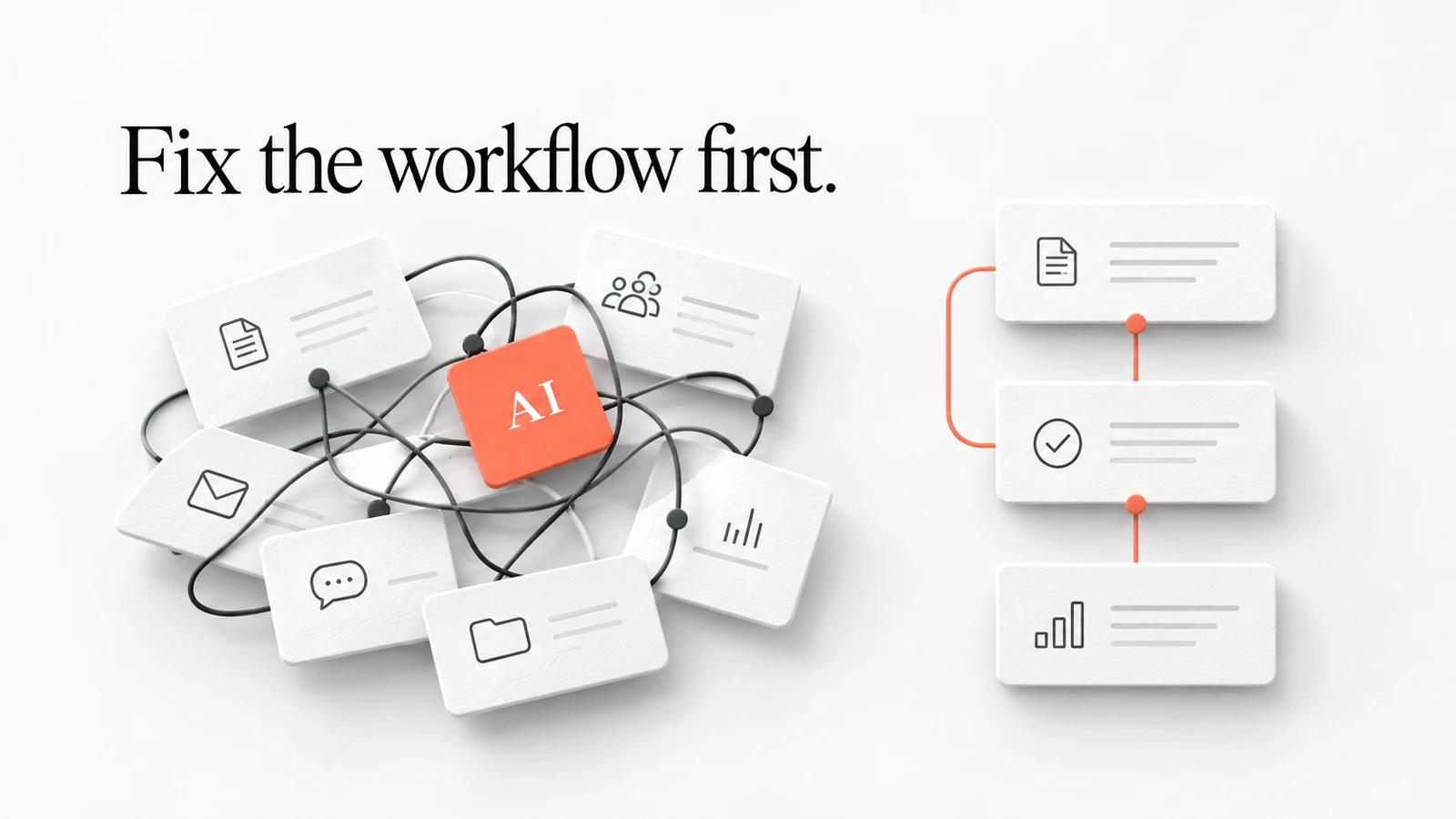
Businesses accumulate useful information faster than they make it usable.
Service documentation sits in one folder. Sales presentations live somewhere else. Customer questions are buried in meeting notes, support tickets and inboxes. Research reports are downloaded, discussed once and forgotten. Website content, training material, videos, reviews and competitive research continue to grow without becoming a coherent body of knowledge.
The result is not always an AI-content problem. It is often an information problem. The organization knows more than its website explains, more than its sales team can quickly retrieve and more than its leaders can easily compare when a decision needs to be made.
Google renamed NotebookLM to Gemini Notebook in July 2026. The product still offers the same useful starting point for this problem: instead of beginning with an open-ended request to a general chatbot, a business can assemble a defined set of relevant sources, question that material and create working outputs from it.
That does not make every answer correct. Grounding a response in selected sources narrows the evidence environment, but it does not remove weak source selection, missing context, model errors or the need for human verification. The quality of the notebook still depends on the quality of the material and judgment behind it.
Gemini Notebook changes the starting point
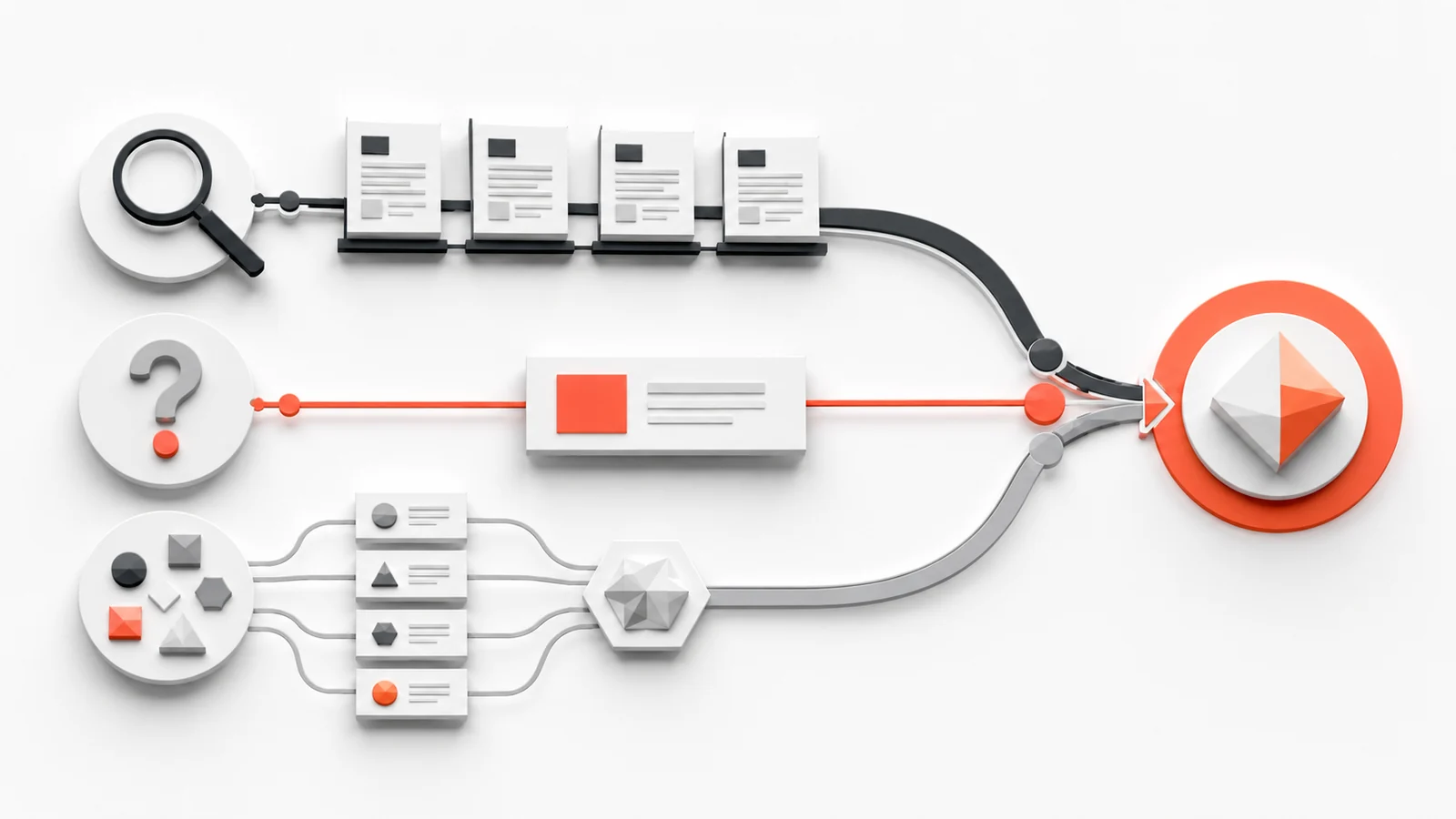
A general AI assistant may answer from a combination of model knowledge, retrieved information and the context supplied in a conversation. Gemini Notebook is organized around the sources selected for a notebook. Google explains that the product uses either the full source set or the subset a user chooses when generating responses.
That difference matters for business research. A team can create a focused environment around one decision, customer segment, service line, market question or body of internal knowledge. Responses include source references when the material supports them, allowing the researcher to return to the underlying passage rather than treating the generated summary as the final authority.
The practical value is not that Gemini Notebook knows the company automatically. It is that the company can decide which evidence belongs in the room before asking the tool to help interpret it.
Build a focused company knowledge notebook
A useful business notebook begins with a defined purpose. A broad upload of every available file can create more noise, conflicting language and outdated information. A focused notebook gives the team a clearer research boundary.
For example, a company evaluating how it explains a complex service might assemble approved service documentation, recent sales material, customer research, website pages, implementation notes and a small set of credible industry sources. A team preparing new employee training might use current procedures, policy documents, presentations, recorded instruction and approved examples.
Google currently supports a wide range of source formats, including documents, PDFs, web pages, YouTube material, audio, Google Drive files and other supported uploads. Availability, limits and individual features vary by account, Workspace edition and plan, so organizations should confirm the current product requirements before designing a workflow around them.
The strategic work happens before the first question is asked. Someone must decide what is authoritative, what is outdated, what is duplicated and what should never be uploaded without appropriate permission and privacy review.
- Define the business question the notebook should support
- Choose current, relevant and permitted source material
- Separate approved information from working drafts
- Remove obsolete or contradictory versions when possible
- Document important gaps instead of filling them with assumptions
- Review account, privacy and data-handling requirements before adding sensitive material
A notebook is only as strategically useful as the source set it is built to examine.
Find the questions buyers keep asking
One of the strongest Gemini Notebook use cases is directly connected to buyer discovery. Businesses already possess evidence about what prospects do not understand. It appears in sales-call notes, customer emails, support questions, reviews, lost-opportunity summaries, service documents and website analytics commentary. The Buyer Questions Most Service Websites Fail to Answer explains why those questions deserve a place in the public information system.
A focused notebook can help a team compare that material and look for repeated patterns. Which questions appear across several sales conversations? Which terms do customers use instead of the company’s internal language? Where do prospects ask for reassurance, proof, pricing context, process details or a clearer explanation of fit?
Gemini Notebook can help synthesize the source set, but it cannot decide which pattern matters commercially. A repeated question from low-fit prospects may not deserve the same priority as a single point of confusion that consistently delays high-value decisions. People still need to interpret the finding in the context of audience, revenue, risk and the actual buying process.
- Recurring buyer questions and objections
- Unclear or inconsistent service explanations
- Terminology customers use when describing the problem
- Missing proof, process details or comparison information
- Questions that should be answered publicly before contact
- Questions better handled privately by sales or subject-matter experts
Research a market or competitor set without losing the evidence
Market research often becomes a trail of browser tabs, downloaded reports and disconnected notes. Gemini Notebook can create a more disciplined research environment when the team deliberately selects the material to examine.
A notebook might include relevant competitor pages, industry publications, conference presentations, credible interviews, regulatory documents and category research. The team can ask how companies describe similar services, which claims appear repeatedly, where explanations differ and which buyer concerns receive little attention.
The value is not asking AI to declare the best competitor. It is being able to interrogate a defined body of evidence and return to the material supporting an observation. This is especially useful when several people need to understand the same research foundation before making a positioning, content or product decision.
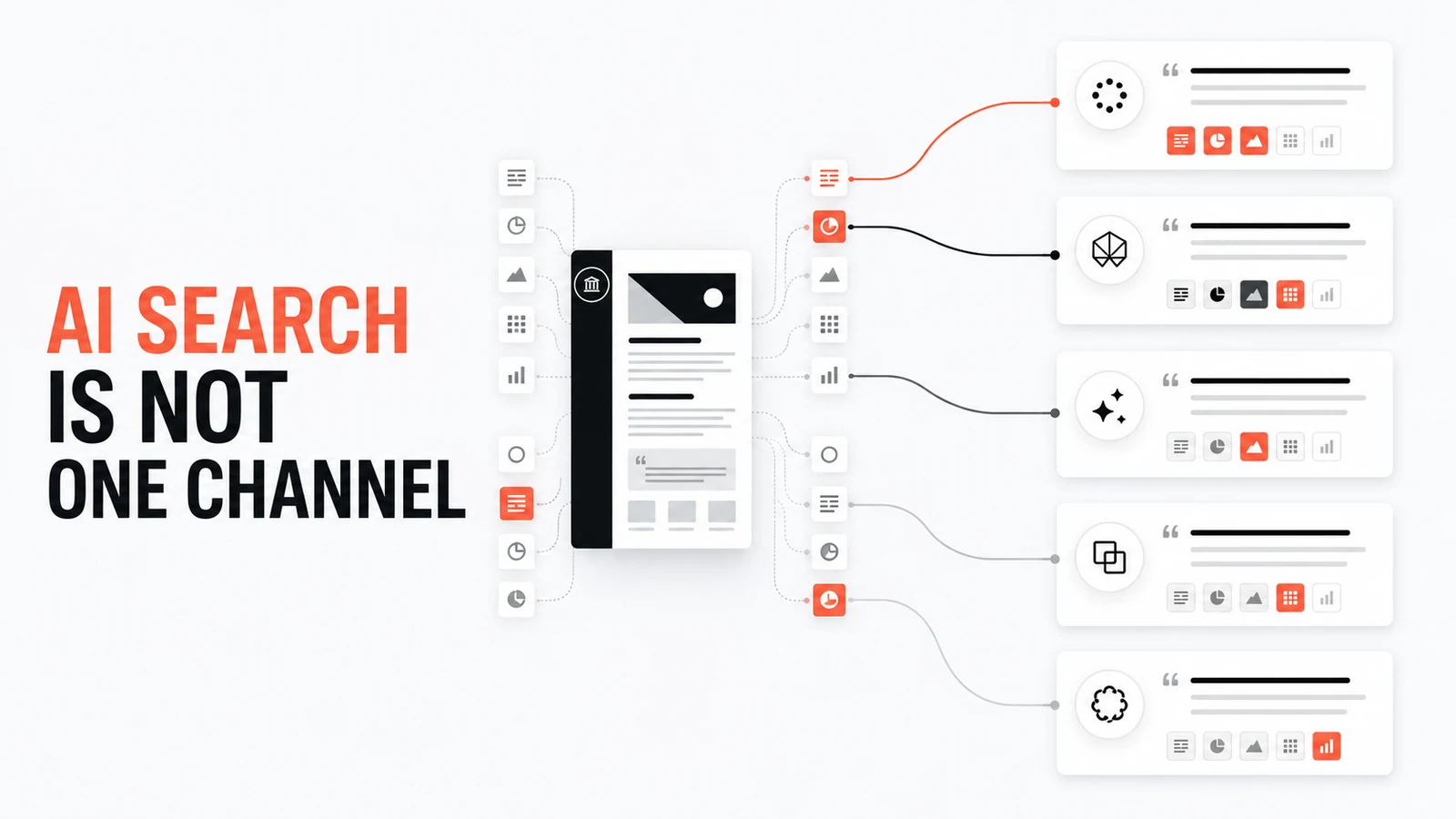
Source selection still controls the quality of the exercise. AI Search Is Not One Channel shows why different systems and research environments can surface different evidence. A narrow or biased source set can produce a narrow or biased conclusion, even when every response includes a citation.
Turn dense information into useful working outputs
Gemini Notebook’s Studio can turn selected sources into several formats. Current official Google documentation describes reports, Audio Overviews, Video Overviews, Mind Maps, slide decks, infographics, flashcards and quizzes. Google has also added slide revision and presentation export options. Some capabilities, higher limits and advanced video formats depend on the user’s account, age, language or plan.
For a business, the most useful output depends on the decision. A report might help a leader prepare for a planning meeting. An Audio Overview can offer another way to absorb a long source set. A Mind Map may help a team see relationships among topics. A slide deck or infographic can provide a starting point for internal explanation. Training outputs can support onboarding or category education.
These are drafts and working aids, not automatically finished executive materials. Google explicitly warns that generated slide decks may contain factual or visual inaccuracies. The same review principle should apply to every generated format. Confirm important claims in the underlying sources, refine the narrative and decide whether the output is appropriate for its audience.
- Executive and stakeholder briefings
- Internal research summaries
- Meeting preparation and decision context
- Role-specific training and onboarding material
- Category education and source comparisons
- Working presentations that will receive human review
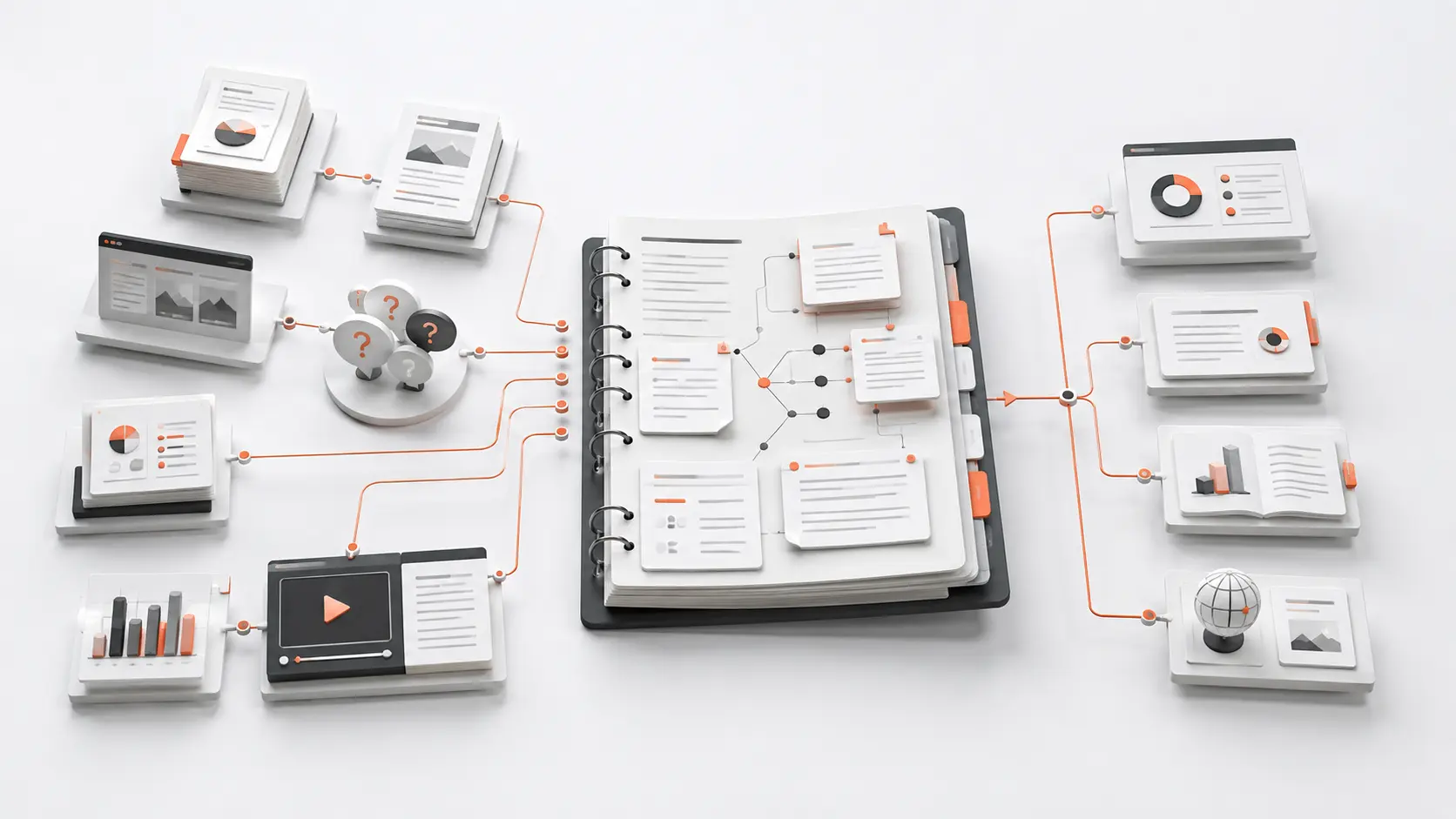
Trusted sources
- Reports and research
- Website content
- Buyer questions
- Presentations
- Videos and transcripts
- Company documents
NotebookLM research environment
- Organize
- Question
- Compare
- Synthesize
- Trace sources
Business outputs
- Buyer insights
- Content opportunities
- Executive briefs
- Training material
- Research summaries
- Better decisions
Use Gemini Notebook before creating public-facing content
The strongest content use case happens before drafting begins.
Many companies use AI at the final stage. They ask for an article, page or campaign before assembling the evidence, defining the buyer question or deciding whether the topic deserves to exist. That workflow makes it easy to produce generic material that sounds complete but adds little to the buyer’s decision.
A better sequence begins with the organization’s knowledge and the buyer’s needs:
- Gather relevant evidence and approved source material.
- Organize a focused source set around one business or buyer question.
- Identify repeated questions, contradictions and missing information.
- Decide which gaps deserve internal action and which deserve public content.
- Create or improve the page, article, presentation or explanation.
- Verify every consequential claim and review the work with the appropriate expert.
How this supports SEO, AEO, GEO and AI discoverability
Modern discoverability depends on more than inserting keywords into a page. SEO, AEO and GEO work together when useful information is accessible, clearly structured, accurate and supported by genuine expertise. Gemini Notebook can support the research and synthesis stages, but the public content still needs to do the real work for a human buyer.
Strong content answers real questions, explains tradeoffs, demonstrates what the organization knows and gives the buyer enough clarity to evaluate the next step. It reflects the actual business rather than a synthetic version of the category.
AI-readable content should first be human-useful content. A company does not become easier to understand by publishing more pages that say the same thing as everyone else.
- Answer a real buyer question
- Use evidence the organization can stand behind
- Explain rather than merely summarize
- Include useful distinctions and decision criteria
- Reflect the company’s actual expertise and operating reality
- Help a person understand, trust or choose with greater confidence
What Gemini Notebook should not replace
Gemini Notebook can make existing information easier to question, compare and reformat. It should not become the authority that decides what the business knows or what the public should believe.
The product itself reinforces that limit. Responses depend on the available source material, precise questions help retrieval and generated outputs may contain inaccuracies. A source reference is a path back to the evidence, not proof that the conclusion is complete.
- Subject-matter expertise
- Strategic judgment and leadership decisions
- Source verification and fact-checking
- Original research and direct customer interviews
- Proper analytics and complete data analysis
- Legal, privacy, security or compliance review
- Human review of generated reports, slides, audio or visuals
- The decision about what information should become public
Automate what should be automated. Keep humans where humans create the most value.
Start with one decision, not the entire company
The practical way to test Gemini Notebook is not to upload the company archive. Start with one bounded question that has a clear owner and a useful outcome.
A services firm might examine why prospects misunderstand one offer. A marketing team might organize the evidence for a new category page. A leadership group might synthesize a limited set of reports before a planning session. A training team might build a reviewed onboarding resource from current procedures and approved material.
Define what success means before building the notebook. The result might be a documented list of unanswered buyer questions, a clearer research brief, a corrected set of internal explanations or an evidence-backed content plan. It should not be a pile of generated artifacts with no decision attached to them.
The advantage is not owning the tool
Businesses increasingly need to make their knowledge usable not only to their teams, but also across websites, content, search engines, AI systems and buyer research journeys.
Gemini Notebook can help an organization bring selected evidence into a focused research environment. It can make long material easier to examine, help teams notice repeated questions and provide useful starting points for briefs, training, presentations and content planning.
The competitive advantage does not come from having access to the software. It comes from having useful knowledge, selecting credible sources, asking better questions and applying human judgment to what the system returns.
When a business turns what it knows into clearer, accurate and more useful information, it becomes easier for customers to find it, understand it, trust it and choose it. The tool can support that work. The quality of the thinking still determines whether the work matters.
FROM INFORMATION TO DISCOVERABILITY
Make the knowledge behind your business easier to find, understand and trust.
Your strongest expertise does little for buyer discovery if it stays scattered across internal documents, disconnected pages and unstructured information. OutsourceSy helps identify where the information buyers need is missing, unclear or difficult to discover across search, AI research and your website.
Request a Discovery ReviewSources
- Google Workspace Updates: NotebookLM is now Gemini Notebook
- Google Help: Add or discover new sources for your notebook
- Google Help: Frequently asked questions for Gemini Notebook
- Google: Video Overviews and the upgraded NotebookLM Studio
- Google Workspace Updates: New NotebookLM source, visual and output capabilities
- Google Help: Generate and revise a slide deck in Gemini Notebook
- Google Help: Gemini Notebook plans, limits and enterprise data protection