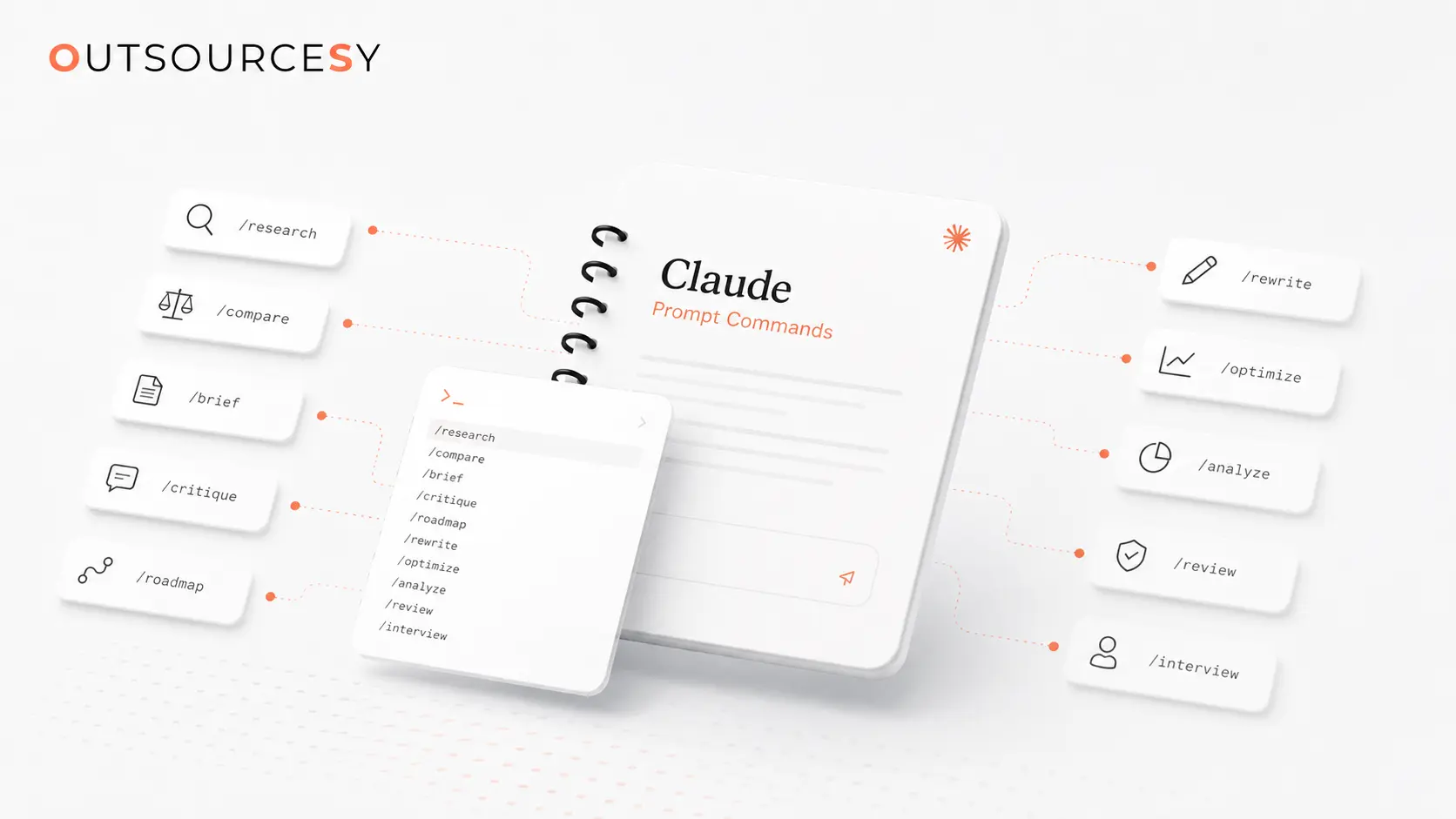
Most businesses do not need a longer list of clever prompts. They need a repeatable way to ask for useful work.
A team may use Claude to summarize a report, compare vendors, review a service page, prepare for a sales conversation or organize research. Yet the request often begins from a blank chat box, so the quality of the instruction changes every time. Important context gets omitted. Evidence is not attached. The desired output is unclear. The result may sound polished without being decision-ready.
A short command such as /brief, /compare or /critique can act as a reusable starting instruction. The slash makes the shortcut easy to recognize and remember. It does not activate a hidden Claude capability, and these are not official Anthropic commands. They are plain-language prompt workflows that a person or team can type, save and adapt for recurring work.
The command is only the first line. Stronger results still depend on the business context, source material, constraints, audience and output that follow it.
Why a command can be useful
A reusable command gives a task a name. Instead of explaining from scratch that Claude should compare three options against cost, fit, risk and implementation effort, a team can begin with /compare and add the materials and criteria that matter for that decision.
The benefit is consistency, not automation for its own sake. A defined shortcut can remind people to ask for the same kind of reasoning, use comparable criteria and request a useful format. It can also make a repeated workflow easier to review and improve over time.
Anthropic’s current prompting guidance emphasizes clear instructions, relevant context, examples when useful and explicit output requirements. Claude Projects can also hold project instructions and knowledge for recurring work. A slash-style command is simply a memorable interface for applying those principles to business tasks.
Begin with the kind of thinking you need
The first group of commands helps define the reasoning mode. /brief asks for the shortest useful answer. /simplify makes a complex explanation easier to understand. /compare creates a side-by-side evaluation. /critique looks for weaknesses, unanswered questions and opportunities to improve.
Other commands can make the review more demanding. /devil asks for the strongest case against the current idea. /debate presents the strongest arguments on both sides. /scout looks for risks, edge cases and missing considerations.
These commands are most useful when the decision criteria are explicit. A comparison of software vendors should not be based on a generic idea of which tool is best. It should reflect the company’s requirements, costs, implementation capacity, risks and customer experience.
- /brief: Give the shortest useful answer for the named audience
- /simplify: Explain a complex issue in clear, appropriate language
- /compare: Evaluate options against stated criteria
- /critique: Identify weaknesses, gaps and improvements
- /devil: Make the strongest case against the current direction
- /scout: Look for risks, blind spots and edge cases
Use research commands to stay closer to the evidence
Research and analysis work becomes more useful when Claude is given the actual material to examine. /summary can condense a long report. /extract can pull customer objections from call notes. /patterns can identify recurring themes across reviews. /synthesize can combine several source sets into one coherent briefing.
A command such as /verify should not be interpreted as a guarantee of truth. It can ask Claude to separate claims supported by the supplied material from assumptions or unsupported statements. A person still needs to inspect the sources, confirm important facts and decide whether the evidence is complete.
The same principle applies to /research. Define the question, identify acceptable sources, explain the business context and require Claude to distinguish evidence from interpretation. Without those boundaries, a long response can create the appearance of research without the discipline of a real research process.
- /research: Investigate a defined question and organize the findings
- /analyst: Examine data, evidence or a business situation
- /extract: Pull specific information from a source set
- /patterns: Find repeated themes, signals or anomalies
- /questions: Identify the next questions the evidence raises
- /verify: Separate supported claims from assumptions
- /synthesize: Combine sources into a coherent view
FREE CLAUDE PROMPT GUIDE
40 Claude Prompt Commands for Better Business Work
Get the printable OutsourceSy guide with reusable shortcuts for research, writing, analysis, strategy, sales and everyday business work.
- 40 practical prompt shortcuts
- Real business examples
- Reusable prompt framework
Make writing commands serve a real communication goal
Writing commands can reduce the friction of moving from a rough draft to useful communication. /outline helps establish a logical structure before drafting. /rewrite adapts language for a particular audience or purpose. /editor reviews structure, repetition, clarity and flow. /proof limits the task to grammar, spelling and consistency so the strategy is not changed at the last minute.
The audience and meaning should remain explicit. Asking Claude to rewrite a technical explanation for a CEO is different from asking it to simplify the idea for a new employee. A good instruction identifies what must remain accurate, which evidence governs the draft, what tone is appropriate and what the output should help the reader understand or do.
Commands such as /repurpose can help adapt one source into several formats, but they should not become a machine for publishing large volumes of generic content. Every public asset still needs a reason to exist, a real audience question and human review.
- /rewrite: Improve clarity, tone or audience fit without changing the purpose
- /headline: Develop credible title and hook options
- /outline: Create the structure before drafting
- /editor: Review structure, repetition, clarity and flow
- /repurpose: Adapt evidence into other useful formats
- /proof: Correct surface errors without reopening the strategy
Turn strategy into sequenced work
Strategy commands are useful when a team needs to move from a goal or body of findings into action. /roadmap can create a sequence. /prioritize can rank issues by impact, urgency, effort and dependency. /architect can help define a workflow, system or information structure. /pm can translate an idea into milestones, owners and acceptance criteria.
The model cannot determine commercial importance without business context. A website issue that looks technically severe may have little effect on a valuable buyer journey. A small content gap may matter greatly if it blocks the decision of a high-value prospect. The prompt should explain the objective, available resources, dependencies, deadlines and risks before asking Claude to prioritize.
The output should support a decision, not merely create a longer task list. Ask for tradeoffs, assumptions and the evidence that would change the recommendation.
- /roadmap: Build a prioritized sequence of work
- /plan: Turn a defined goal into practical actions
- /prioritize: Rank work against business criteria
- /architect: Design a workflow or information structure
- /pm: Define milestones, owners, dependencies and acceptance criteria
- /mentor: Work through a problem from a senior perspective
Support sales and marketing without removing judgment
Sales and marketing shortcuts can help a team think more clearly about positioning, offers, buyers and follow-up. /position can clarify category, audience and differentiation. /objections can surface the concerns a careful buyer may raise. /followup can create a useful next message that adds information instead of repeating a request for attention.
These workflows are strongest when grounded in real evidence such as sales notes, buyer interviews, website behavior, customer questions and approved service information. A synthetic buyer persona built from assumptions may be neatly formatted and still be wrong.
Human review is especially important when an output represents the company publicly or affects a commercial relationship. Claude can help prepare the work. A person remains responsible for the truth of the claim, the appropriateness of the message and the final decision to use it.
- /pitch: Create a concise explanation for a defined buyer
- /position: Clarify category, audience, differentiation and value
- /offer: Review scope, proof and buying logic
- /persona: Build a working buyer profile from evidence
- /objections: Identify and answer likely buyer concerns
- /followup: Add a useful new angle to the next message
The five-part formula behind a stronger command
A command becomes more useful when it is followed by five practical ingredients: context, evidence, constraints and output, with the command defining the type of work.
For example, /critique could be followed by the service-page draft, the intended buyer, the two competitors being considered, the claims that must remain accurate and a request to rank the five most consequential issues before rewriting anything.
This structure makes the request easier to inspect. It clarifies what Claude should use, what it should avoid and what a useful response must contain.
Command + Context + Evidence + Constraints + Output
What reusable commands should not replace
A command library can improve consistency, but it does not turn a model into the final authority. AI output should be treated according to the consequence of the work. A brainstorm has a different risk profile from a legal claim, financial decision, customer promise or public research finding.
People remain responsible for choosing the source material, checking consequential facts, protecting confidential information, applying subject-matter expertise and deciding what should be published or acted upon.
The goal is not better prompts for their own sake. It is better research, clearer decisions, stronger communication and less wasted work. A useful command shortens the path to disciplined thinking. It does not remove the discipline.
- Subject-matter expertise and strategic judgment
- Verification of claims and source quality
- Customer interviews and original research
- Privacy, security, legal or compliance review
- Leadership accountability for consequential decisions
- Human review before publication or customer use
FREE CLAUDE PROMPT GUIDE
40 Claude Prompt Commands for Better Business Work
Get the printable OutsourceSy guide with reusable shortcuts for research, writing, analysis, strategy, sales and everyday business work.
- 40 practical prompt shortcuts
- Real business examples
- Reusable prompt framework
PRACTICAL AI FOR BETTER DECISIONS
Use AI to make important knowledge clearer, not merely faster.
OutsourceSy connects practical AI use with the larger work of making a business easier for buyers to find, understand, trust and choose.
Explore Buyer Discovery