The vocabulary of search has become crowded. A leadership team may hear that SEO is no longer enough, AEO is the future and GEO requires an entirely new content strategy. The result is often more confusion than clarity.
The three terms are useful only when they help an organization make better decisions. They become counterproductive when they are sold as isolated channels, renamed versions of routine work or shortcuts to guaranteed placement in AI-generated answers.
The practical distinction is not which acronym wins. It is what the business needs search and answer systems to understand, what evidence exists to support that understanding and whether the buyer finds a credible next step.
SEO remains the discoverability foundation
Search engine optimization improves the ability of pages to be crawled, interpreted, indexed and surfaced for relevant searches. It connects technical access with information architecture, page purpose, useful content, internal linking, authority and measurement.
That is broader than placing keywords in headings. A mature SEO program decides which pages should exist, which buyer need each page should serve, how pages relate to one another and whether search systems can reliably reach the information. It also examines whether organic visibility attracts the right audience and contributes to a business outcome.
SEO matters to AI-era discovery because inaccessible, ambiguous or thin information is not a strong foundation for any retrieval system. A page that is difficult for a search engine to crawl is also a weak candidate for systems that depend on web retrieval. A company whose services are poorly explained gives both machines and buyers less to work with.
- Technical crawlability, rendering and indexation
- Clear site architecture and internal discovery paths
- Pages aligned with real search intent and buyer needs
- Substantive content supported by evidence
- Relevant authority, links and third-party references
- Measurement tied to qualified demand, leads and revenue
AEO makes a useful answer easier to find and present
Answer engine optimization focuses on whether a system can identify a clear, complete response to a question. The answer might appear in a conventional featured result, a voice response, an on-site help experience or an AI-generated summary.
Good AEO is not a page full of one-line answers. Some questions require a sentence. Others require conditions, examples, limitations or a process. The work is to match the depth of the explanation to the decision the reader is trying to make.
Descriptive headings, direct definitions, well-scoped paragraphs, useful lists and accurate structured data can help systems interpret a page. But presentation cannot compensate for weak substance. A neatly formatted answer without evidence, context or expertise remains a weak answer.
What strong answer content looks like
Consider a consulting firm explaining a Buyer Discovery Audit. A weak answer says it is a comprehensive review of visibility. A useful answer explains what is examined, which research surfaces are included, what the client receives, where the scope stops and how findings become priorities.
The second version is easier for a buyer to evaluate and easier for an answer system to interpret because the important relationships are explicit.
GEO addresses representation in generative experiences
Generative engine optimization is the least settled term of the three. In practical use, it refers to improving the information environment that generative systems may draw on when describing, comparing or recommending organizations, products and ideas.
That environment extends beyond the company website. It can include expert profiles, reviews, reputable directories, trade publications, original research, case studies, product documentation, community discussions and other sources that establish what the organization is and why it is relevant.
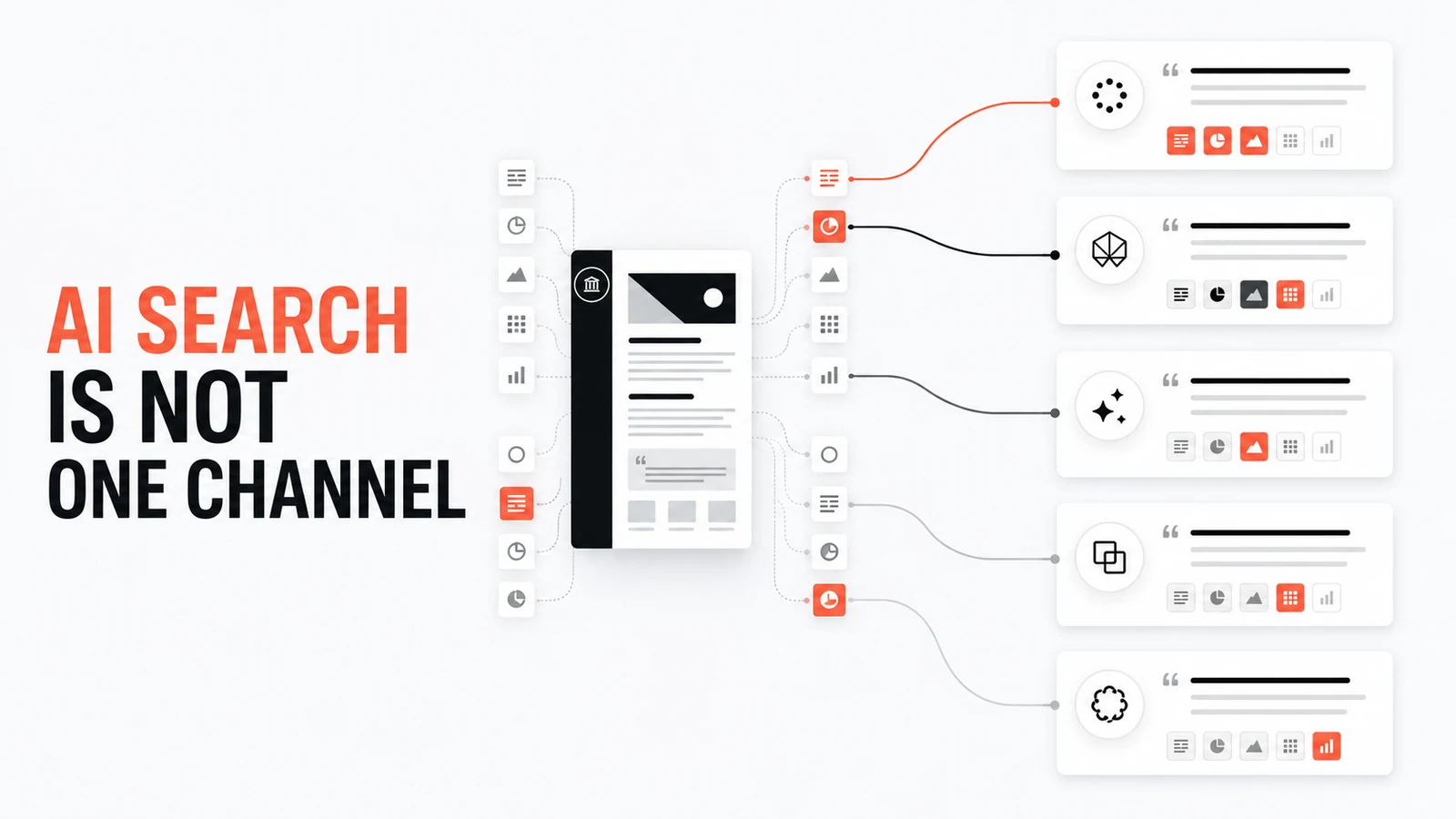
GEO is not a hidden tag that submits a brand to ChatGPT, Claude, Gemini, Perplexity or Google’s AI experiences. Those systems can use different retrieval methods, source pools and response logic. Work that improves one platform may not produce the same result elsewhere.
The defensible goal is to make the business easier to understand and verify. That means clearer entities, stronger source consistency, useful first-party explanations and credible corroboration. It does not mean manufacturing mentions or publishing five versions of the same article for five platforms.
Where SEO, AEO and GEO overlap
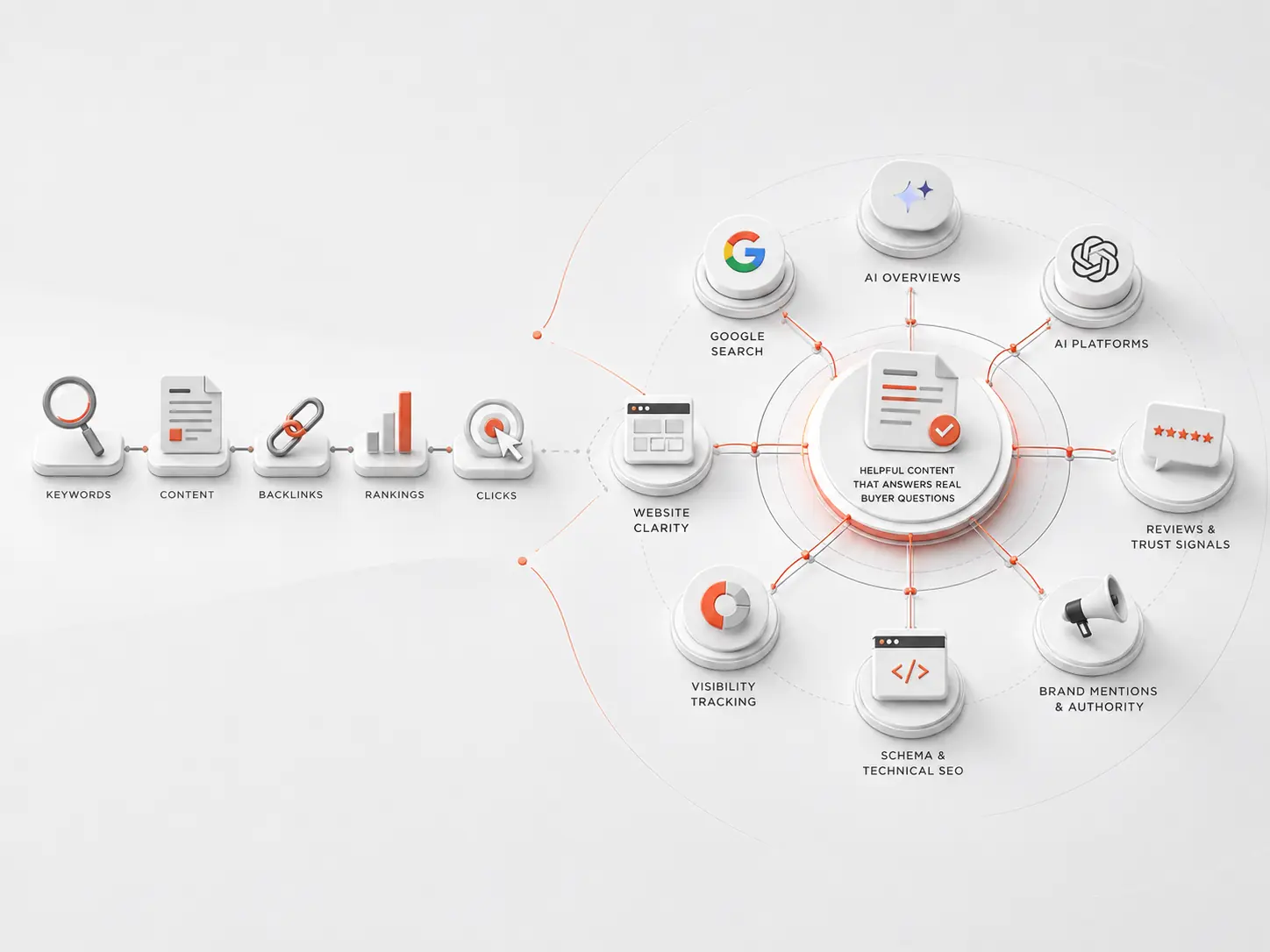
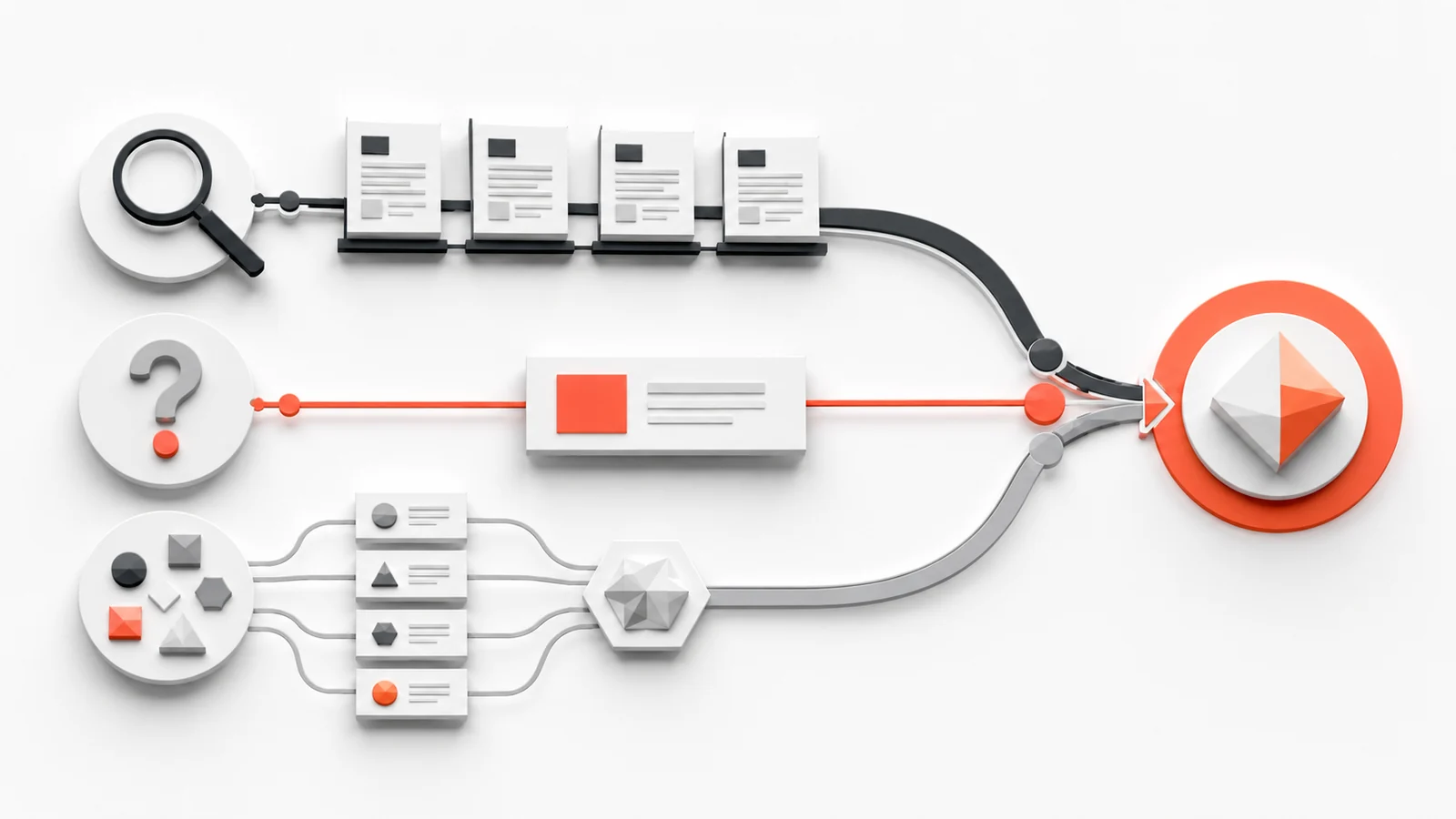
Most of the durable work sits in the overlap. A technically accessible service page with a clear purpose, direct explanations, credible proof and strong internal links supports traditional rankings, answer extraction, generative retrieval and human evaluation at the same time.
The overlap is why three disconnected workstreams usually create waste. Separate teams may produce competing page recommendations, duplicate measurement and conflicting definitions of success. The company ends up optimizing labels rather than improving the information buyers actually encounter.
- Clear descriptions of the organization, services, audiences and locations
- Content that answers material buyer questions without evasion
- Accessible pages with sensible canonicals and internal links
- Consistent information across first-party and third-party sources
- Evidence-backed claims, authorship and subject-matter expertise
- Accurate structured data that reflects visible content
- Measurement that distinguishes visibility from business impact
How the same page can serve three discovery paths
Imagine a health care organization offering a specialized treatment. The SEO requirement is a crawlable service page aligned with the language patients use. The AEO requirement is a clear explanation of eligibility, process, risks and what happens next. The GEO requirement is a wider evidence picture that connects the organization, clinicians, credentials, locations, reviews and credible external references.
Those are not three pages. They are three perspectives on the quality and usefulness of the same information system.
The page may rank in Google, support an AI-generated answer or help a buyer verify a recommendation received elsewhere. Its commercial value comes from serving the full research journey, not from satisfying one acronym.
Common mistakes when organizations chase the acronyms
The most expensive mistakes usually come from treating a new label as proof that the underlying strategy is new. Organizations buy dashboards before defining buyer questions, add schema before improving the page, create shallow question-and-answer content at scale or measure a handful of prompts as if they were stable rankings.
- Renaming ordinary SEO tasks as GEO without changing the decision quality
- Publishing hundreds of thin answers that add no original value
- Treating structured data as a substitute for credible content
- Optimizing for one AI platform and assuming the result transfers everywhere
- Reporting mentions without checking accuracy, context or buyer relevance
- Ignoring website trust and conversion after visibility is achieved
How to decide what to prioritize
Start with the business constraint, not the terminology. If important pages are not indexed or the site architecture is incoherent, foundational SEO comes first. If pages rank but fail to answer material questions, improve the content and answer structure. If the company is accurately presented on its own site but absent or misrepresented across external research surfaces, examine entity clarity, reputation and source gaps.
A sensible sequence keeps the shared foundation strong and adds platform-specific work only after the evidence shows a meaningful gap. Organizations that need ongoing implementation can use Managed Search & AI Discoverability, while teams that lack a senior owner may need Fractional Search Leadership.
- Map the questions buyers ask from problem recognition through final evaluation.
- Identify the pages and sources that should answer those questions.
- Fix access, architecture and source-of-truth content first.
- Test representative questions across the discovery surfaces buyers use.
- Separate citations, mentions, recommendations and ordinary rankings.
- Prioritize gaps by commercial importance, evidence and implementation effort.
The strategic conclusion
SEO, AEO and GEO are useful lenses, not separate destinations. SEO establishes discoverability. AEO improves answer clarity. GEO expands the focus to the evidence generative systems may use. All three depend on information that is accessible, specific, credible and useful to a human buyer.
The strongest strategy does not chase every new acronym. It builds a coherent discovery system, measures meaningful surfaces separately and fixes the constraints that make the business harder to find, understand, trust or choose.
Turn the distinction into priorities
Build one discoverability roadmap, not three disconnected programs.
Managed Search & AI Discoverability connects technical SEO, answer clarity, entity evidence, content, authority and buyer experience through a prioritized implementation plan.
Explore Managed Search & AI Discoverability