For years, the language of search performance was organized around position. A page ranked third. A keyword moved to page one. An average position improved.
Google AI Mode complicates that shorthand. A user can ask a complex question, receive a synthesized response, examine several supporting links and continue with follow-up questions that reshape the research path. The experience is still search, but one number no longer captures all of it.
In May 2026, Google said AI Mode had surpassed 1 billion monthly users and made Gemini 3.5 Flash its default AI Mode model globally. In June, Google introduced dedicated generative-AI visibility reports in Search Console; Google says those reports reached all websites worldwide on August 31. AI-assisted search visibility is becoming more measurable, but the measurement model is still evolving.
AI Mode and AI Overviews are not the same surface
AI Overviews can appear within a conventional results page when Google determines that a generative summary may help. AI Mode is a conversational search experience designed for complex questions, exploration and follow-ups.
Google says the two experiences may use different models and techniques. Their responses and supporting links can differ. A company should not treat one AI Overview appearance as proof that it will appear in AI Mode, or the reverse.
This is the first measurement correction: report each surface separately. Search results, AI Overviews and AI Mode can contribute to the same buyer journey without producing interchangeable visibility signals.
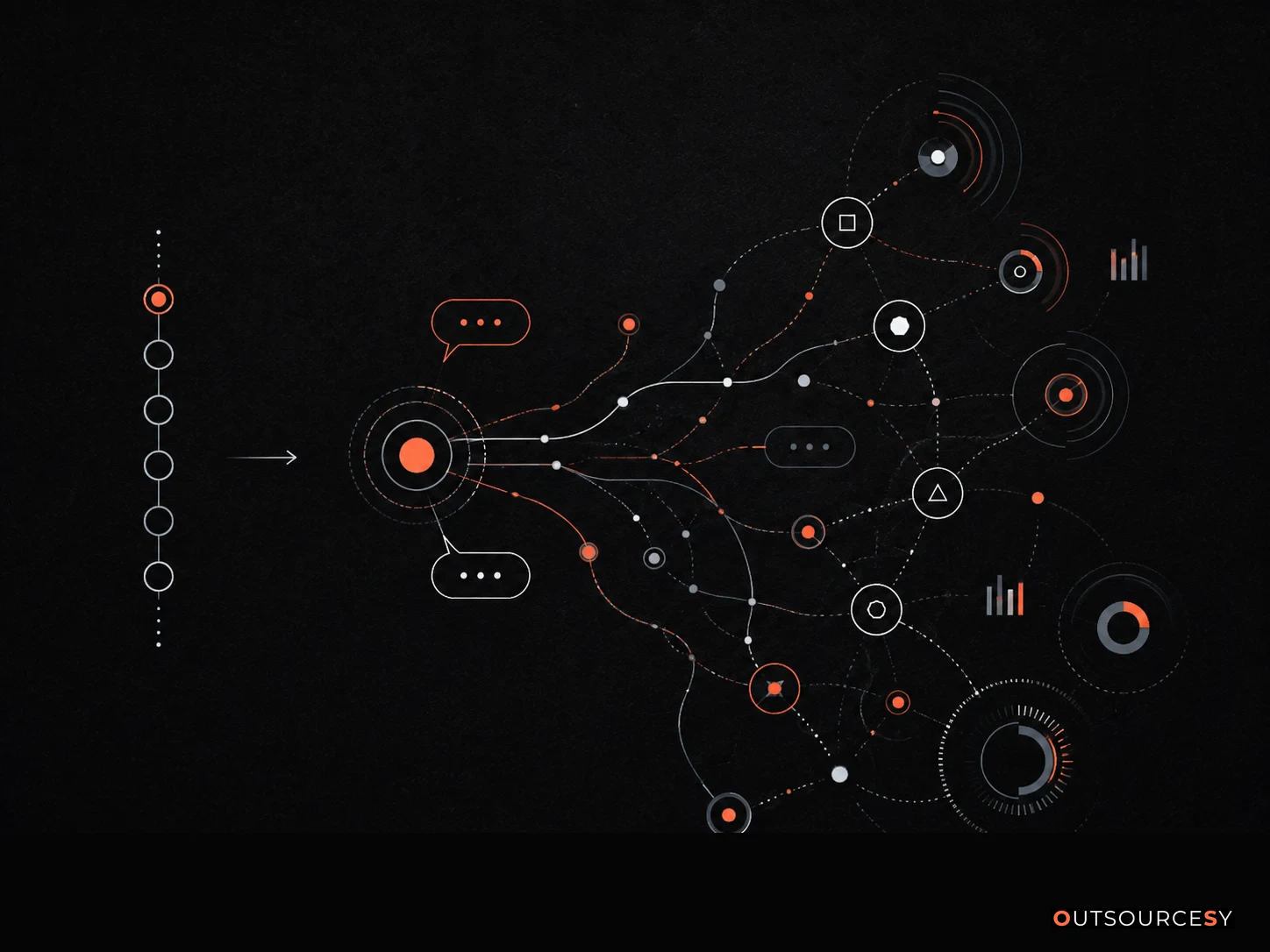
Query fan-out turns one question into a wider research path
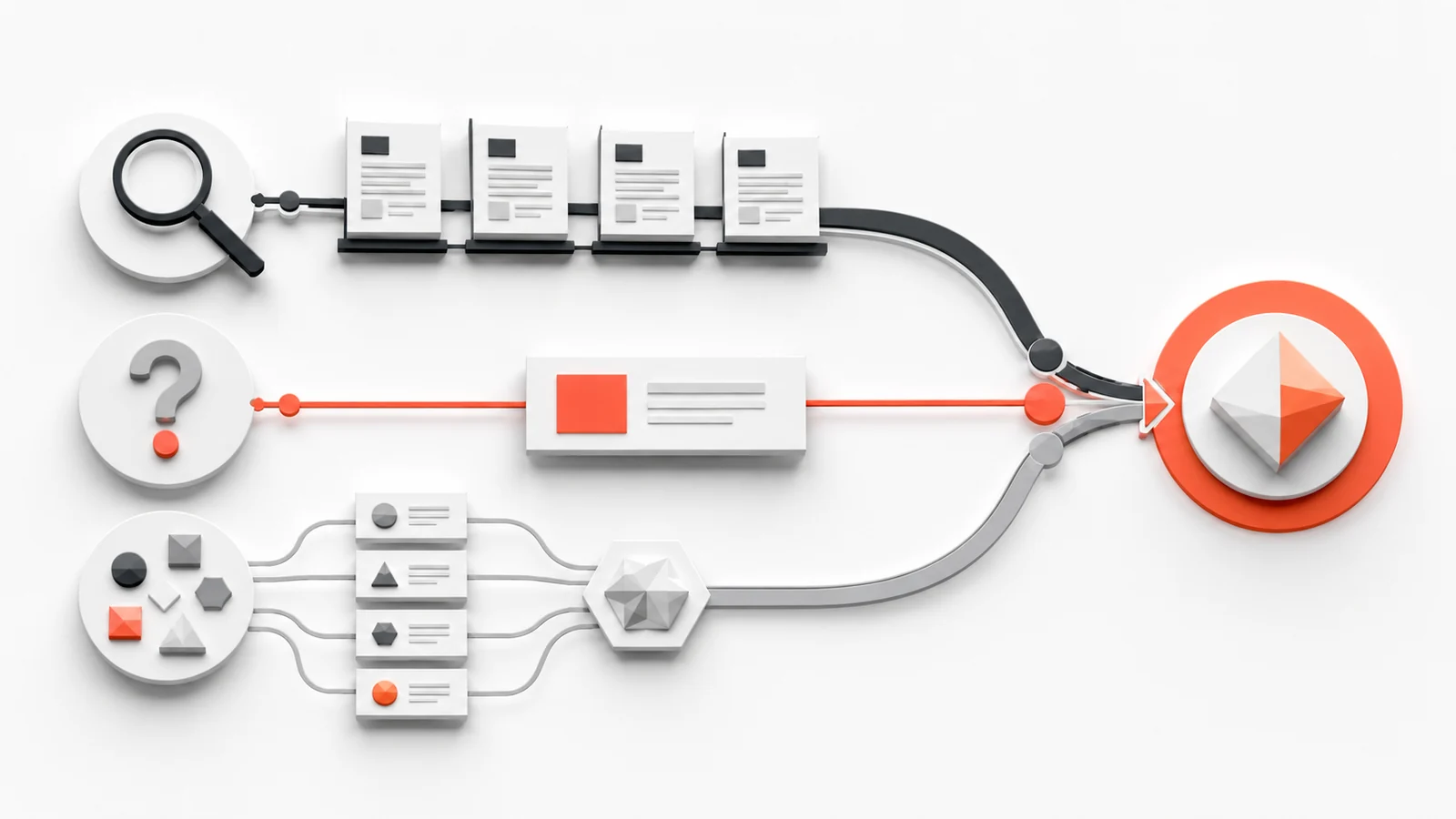
Google documents that AI Mode and AI Overviews may use query fan-out, issuing multiple related searches across subtopics and data sources. A buyer’s broad question can therefore lead the system to investigate components the buyer did not type explicitly.
For a business, this expands the possible evidence set. A service page may support one part of the answer, an expert article another and a third-party source a comparison or credibility claim. The company can be visible through a supporting page even when the experience does not resemble a classic blue-link position.
That does not mean every source link has equal prominence or influence. It means the research path is more complex than a single ordered list.
Traditional position still matters
A false reaction would be to declare conventional rankings obsolete. Google’s own guidance says foundational SEO practices remain relevant to its AI features. Pages still need to be indexed, eligible to appear with a snippet and useful to people.
Strong organic positions can produce direct clicks, brand familiarity and source discovery. They can also reveal whether Google understands a page’s relevance for important demand. The mistake is not measuring position. The mistake is treating position as the entire outcome.
Businesses should retain search demand, ranking distribution, landing-page performance and conversion analysis while adding AI-feature observations where reliable data exists.
SEO Isn’t What It Used to Be provides the broader strategic context for connecting conventional search with AI-assisted discovery.
What Search Console can and cannot show
Google introduced a dedicated generative-AI performance view in Search Console on June 3, 2026, initially for a subset of properties. Google says it completed the worldwide rollout on August 31. The reports cover impressions in generative Search and Discover features, with dimensions such as pages, countries, devices and dates.
That is meaningful progress, but it is not a complete AI-answer analytics system. A supporting-link impression does not automatically reveal whether the brand was mentioned, how much the page influenced the response or whether the user trusted the answer.
Search Console should be combined with analytics, conversion data and qualitative testing. No single platform report can explain the whole buyer decision.
A layered scorecard for modern Google visibility
A useful scorecard separates the signal being measured from the business question it can answer.
- Traditional discovery: impressions, clicks, positions and landing pages for priority queries.
- AI-feature exposure: available impressions and pages associated with Google’s generative search experiences.
- Source visibility: which owned and third-party pages appear as supporting links during representative tests.
- Buyer engagement: qualified visits, decision-content use and progression toward meaningful actions.
- Commercial response: lead quality, assisted conversions, pipeline contribution and recurring sales objections.
Do not create a separate website for AI Mode
Google says there is no special AI schema, AI text file or additional technical requirement for eligibility in AI Overviews or AI Mode. Eligibility does not guarantee inclusion, and formatting alone cannot manufacture usefulness.
The stronger approach is to improve the same source-of-truth system: crawlable pages, unique people-first content, clear entities, current business information, descriptive media, internal links and evidence that answers real questions.
A modular explanation can help both readers and retrieval systems, but the prose should not be chopped into unnatural answer fragments merely to imitate an optimization pattern.
Questions leadership should ask before changing the scorecard
A new search feature can trigger a rush to add metrics before the organization has defined the decision each metric should support. That produces dashboards with more columns but little additional clarity.
Leadership should first identify which products, services, markets and buyer questions matter. A local service, a complex B2B purchase and an informational publisher will not experience AI Mode in the same commercial context. The scorecard should reflect the organization’s actual research journey.
Teams should also agree on the difference between visibility and value. An impression can indicate exposure. A qualified visit can indicate interest. A sales conversation can reveal whether the research experience created accurate expectations. None is a substitute for the others.
- Which buyer questions are important enough to monitor?
- Which pages should support those questions?
- What can Search Console show for this property today, and what remains unavailable?
- How will AI-feature observations connect to analytics and sales outcomes?
- Who owns technical, content and measurement changes across teams?
- What evidence would justify reallocating resources?
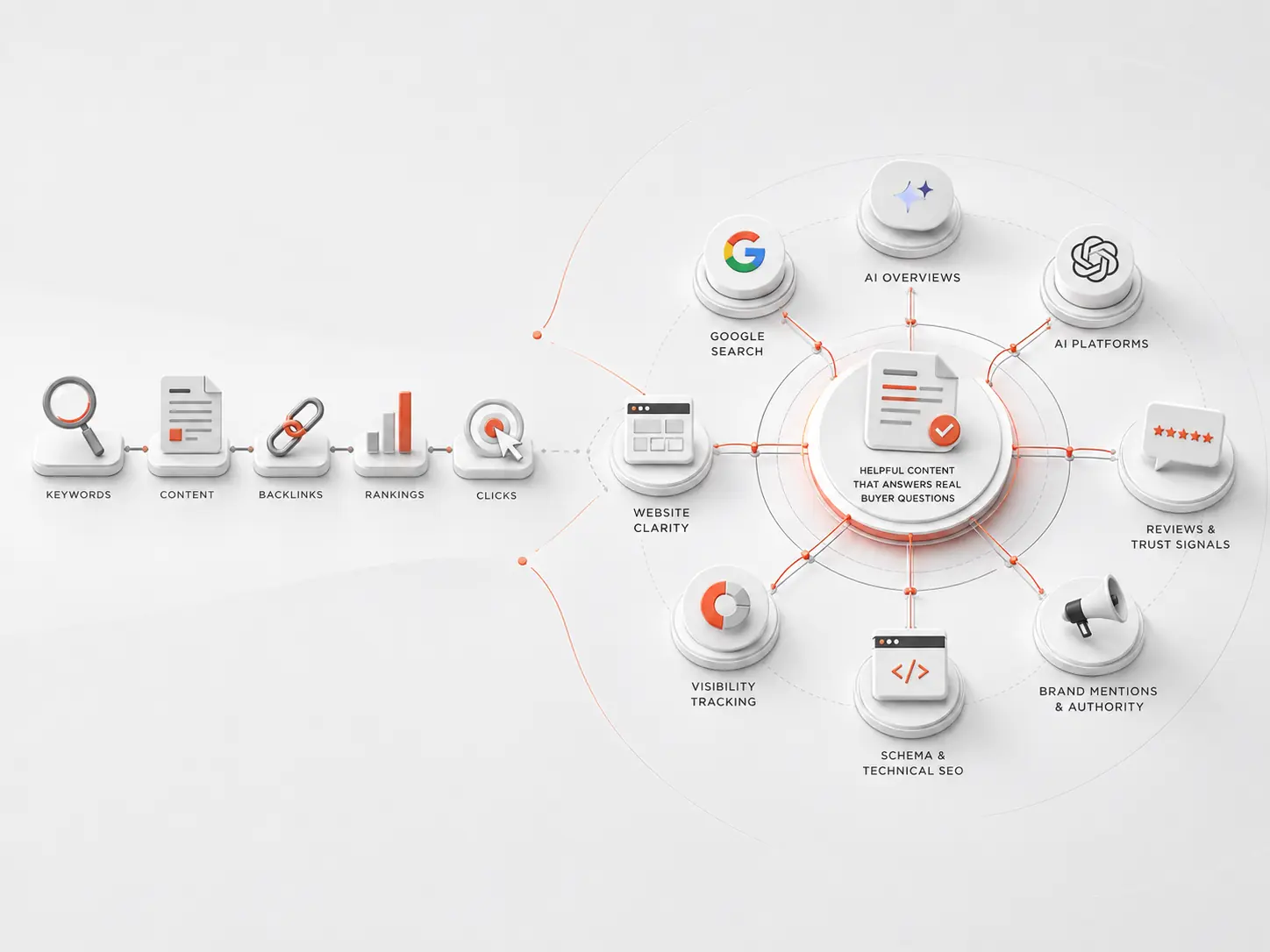
Ranking is becoming a portfolio of visibility
AI Mode adds new ways for a company’s information to be encountered, but it does not erase the existing search ecosystem. A buyer may move from a generated answer to a supporting page, return through branded search, check reviews and convert later through a direct visit.
The practical goal is not to replace one ranking report with an AI visibility score. It is to build a measurement system that reflects how buyers actually discover and evaluate the company.
Traditional rankings remain one valuable asset in that portfolio. They are no longer the complete definition of being found.
Measure the system
Search visibility now spans more than a position report.
Managed Search & AI Discoverability connects technical search, content, AI-feature monitoring and buyer outcomes into one ongoing priority system.
Explore managed discoverability