OpenAI’s advertising program moved beyond its initial U.S. test in 2026. On Aug. 11, OpenAI said ChatGPT Ads had launched in the United Kingdom, Mexico, Brazil, Japan and South Korea, with continued expansion planned.
That creates a familiar temptation: treat the arrival of an ad product as a shortcut to AI visibility. But a sponsored placement and an unsponsored answer do different jobs. One is purchased media. The other is a generated response shaped by the product’s available evidence and systems.
Businesses need a clean measurement boundary between the two. Without it, teams can mistake paid reach for improved discoverability or expect advertising to solve weak positioning, sparse source evidence and unclear company information.
What OpenAI has actually launched
OpenAI began testing ads in the United States in February 2026 for eligible logged-in adults on Free and Go plans. It later expanded pilots and introduced beta tools for advertisers, including self-service campaign management, CPM and CPC buying options and conversion measurement.
By August, OpenAI described ads as launched in several additional countries. The program is still developing. Ads Manager access is gradual, geographic user availability is not the same as advertiser-account availability and not every eligible user will necessarily see an ad.
OpenAI’s documented format places an ad below a response with a sponsor identity, headline, description, landing page and image. The company says ads are labeled, visually separated from the answer and do not influence it. Those are OpenAI’s stated product policies, not an independent audit of every delivery condition.
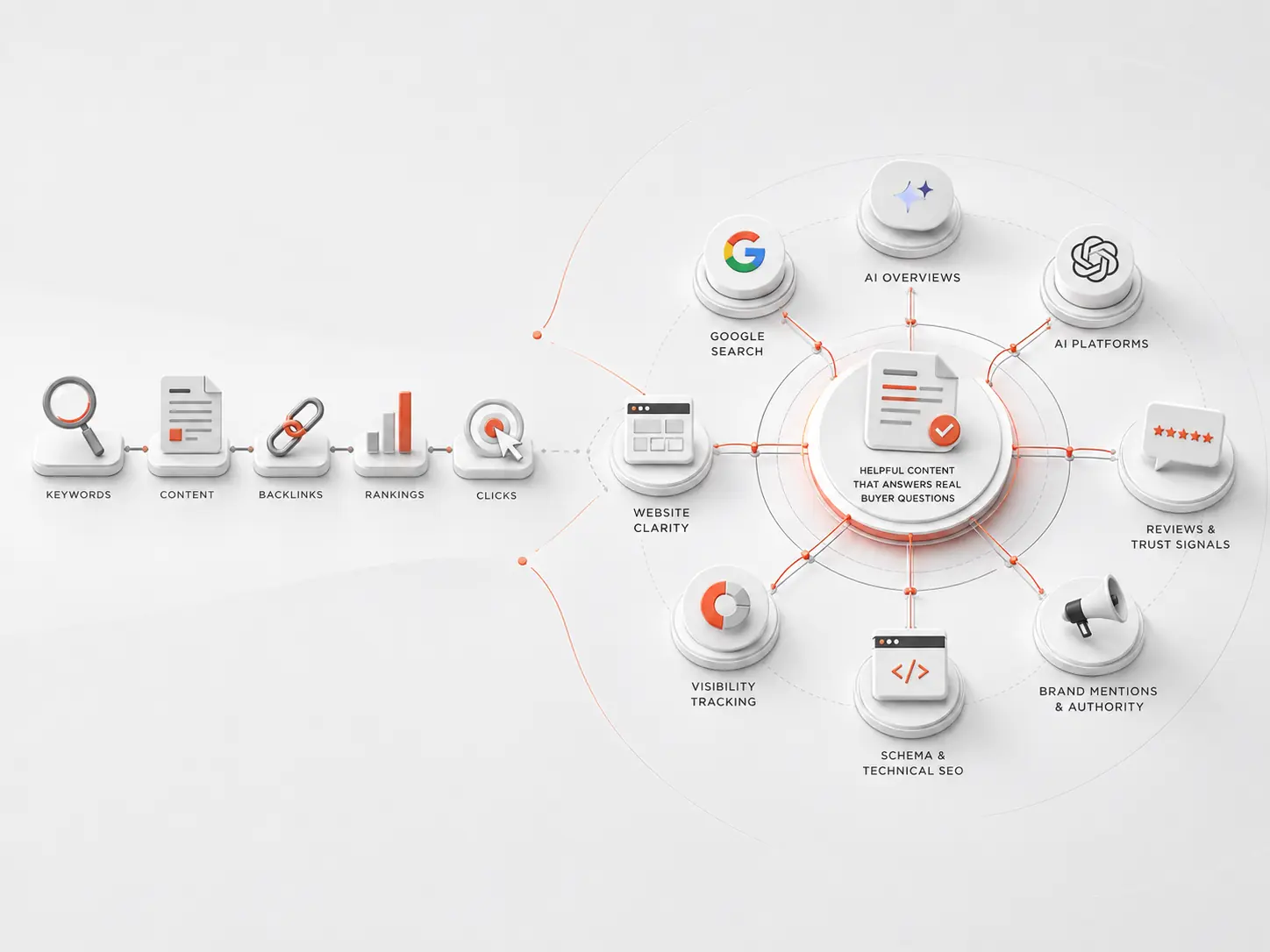
Four kinds of visibility that should not be collapsed
A useful strategy distinguishes the source of exposure and the evidence supporting it.
Sponsored visibility
A paid unit delivered through the advertising system. It is governed by campaign eligibility, targeting controls, bids, budgets, policy and inventory.
Unsponsored AI inclusion
A brand, product or company appears in the generated answer or supporting links without purchasing the placement. This is not a disclosed deterministic ranking position.
Owned source visibility
The company’s website, landing pages, documentation, product data and other controlled sources explain its offer and provide current facts.
Earned and third-party visibility
Reviews, publications, directories, expert references, associations and other independent sources can corroborate or complicate the company’s claims.
Paid placement can support demand without fixing discoverability
Advertising can be commercially useful. It can place a relevant offer near a conversation, introduce a company to an eligible audience and create measurable traffic to a landing page. None of that requires pretending the ad improved organic inclusion.
The landing experience still matters. If the ad promises a specific solution but the page is vague, the buyer encounters friction immediately. If a buyer then performs independent research and finds inconsistent descriptions or weak evidence, the paid click may create awareness without confidence.
This is why paid and organic strategy should coordinate around the same source-of-truth information. Campaign messaging, service pages, company facts and third-party proof should agree even though their distribution systems remain separate.
Contextual advertising is not a disclosed AI keyword ranking
OpenAI describes context hints rather than exact-match keywords. A relevant conversation may make an ad eligible, but that does not guarantee delivery in a particular chat. Advertisers should avoid importing assumptions from conventional paid search without testing how the product actually reports and performs.
The same discipline applies to the unsponsored answer. Calling it an organic ranking can create false precision. A company may be mentioned, cited, recommended or absent, and those outcomes can change with the question, context, sources and product experience.
The measurement model should therefore label paid impressions and clicks separately from unsponsored mentions, citations, referral visits and assisted conversions.
What advertising cannot safely be assumed to do
The current product documentation does not support several common claims.
- Buying ChatGPT ads does not mean a brand can pay to be recommended in the answer.
- Advertising does not create a universal organic AI ranking signal.
- A paid campaign does not guarantee access to every user, market, plan or conversation.
- An ad impression does not prove the company influenced the generated response.
- A strong campaign does not eliminate the need for clear pages, credible evidence and trustworthy conversion paths.
A practical measurement framework
Leadership should be able to see what each investment is producing without mixing incompatible metrics.
- Track sponsored reach, clicks, costs and conversions inside the advertising program.
- Track unsponsored mentions, citations and recommendations through a defined, repeatable question set.
- Measure owned-source performance through landing engagement, qualified actions and sales feedback.
- Monitor third-party evidence for accuracy, reputation patterns and category relevance.
- Compare business outcomes while preserving the attribution limits of each channel.
What organic discoverability still has to accomplish
An unsponsored answer does not need to mention every relevant business, and no company can guarantee inclusion. The controllable work is improving whether the business can be understood when a system or buyer encounters it.
That begins with source-of-truth pages that explain the offer in concrete terms. Service names should map to problems buyers recognize. Audience and location relationships should be explicit. Important claims should lead to evidence rather than decorative language.
Third-party sources play a different role. A review may reveal what clients consistently value. An association profile can verify credentials. An independent article may establish category relevance. These sources should not be manufactured for AI exposure; they should make genuine activity easier to verify.
After the initial exposure, the website has to continue the decision. The page should clarify fit, limitations, proof and the next step without forcing the buyer through a promotional maze. Paid media can introduce the company, but the broader evidence system determines whether the introduction survives independent research.
Getting Found Is Only Half the Job explains why the post-click experience must continue the promise made during discovery.
- Explain the service in the language of the buyer’s problem.
- Keep company, location and leadership facts consistent.
- Connect claims to specific, accessible proof.
- Make conversion paths proportionate to the buyer’s readiness.
- Measure unsponsored visibility separately from campaign delivery.
Paid and organic visibility should reinforce the same business truth
The arrival of ChatGPT Ads does not reduce the importance of organic discoverability. It adds another distribution layer to an already fragmented buyer journey.
A company may encounter a buyer through a sponsored unit, an unsponsored answer, a search result, a review or a third-party article. The strongest strategy does not pretend those surfaces are interchangeable. It ensures the company remains clear and credible as the buyer moves between them.
Paid visibility can buy attention. The broader evidence system still has to earn understanding and trust.
Connect the system
Paid exposure cannot carry the full buyer journey.
Managed Search & AI Discoverability coordinates the owned content, technical access, authority and measurement work behind ongoing discoverability.
Explore managed discoverability