A business owner searches the company name in ChatGPT and finds a thin description. Then she asks for recommended providers in the category and the business disappears entirely. The natural conclusion is that something is broken.
Sometimes there is a clear problem: the website blocks access, services are poorly described or company information conflicts across the web. Sometimes the answer reflects the way the question was framed or the sources available to that product. Often it is a combination.
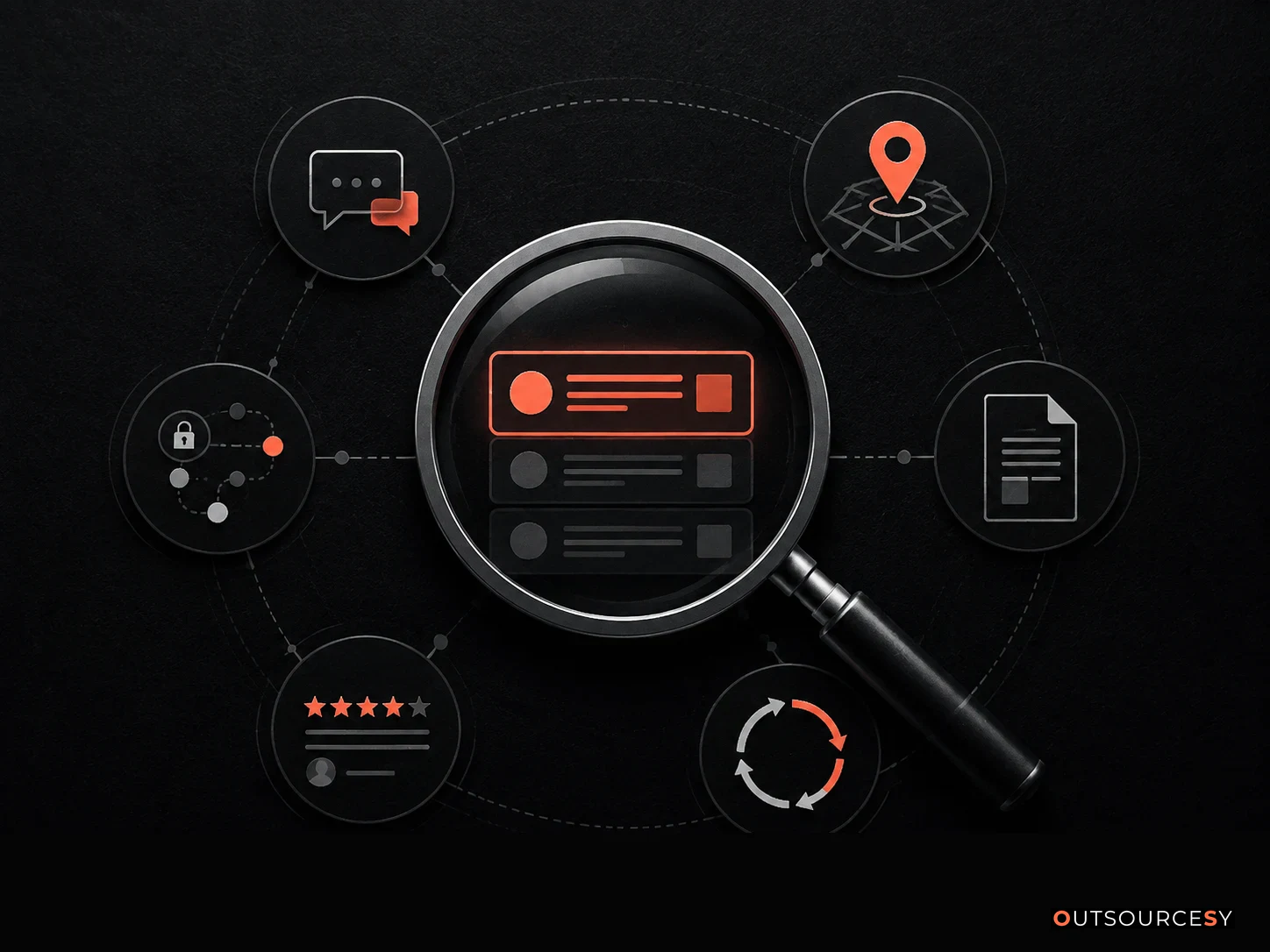
The diagnosis becomes useful only when the business stops treating ChatGPT as a directory submission problem and starts examining the information system that supports discovery.
ChatGPT does not contain a complete business directory
A legitimate company is not automatically represented in every ChatGPT response. Depending on the product experience and question, an answer may rely on model knowledge, current web retrieval or other available context. The result can be incomplete, outdated or inconsistent.
That means a business can rank in Google and still be absent from a recommendation prompt. Traditional ranking, AI mention, citation and recommendation are different outcomes. Each should be measured separately.
It also means that being absent once is not proof of a permanent problem. Important questions should be tested more than once and compared with other platforms, including Claude, Gemini, Perplexity and Google’s AI search experiences. AI Search Is Not One Channel explains why those platform-level results should remain separate.
Your website may not provide a clear source of truth
Many websites assume the reader already understands the business. The homepage uses a broad promise. Services are compressed into a few cards. Expertise is described with adjectives rather than evidence. Location, audience and process information may be scattered or missing.
A polished design cannot compensate for an incomplete explanation. Priority services need pages that define the problem, audience, approach, boundaries, proof and next step. Those pages should connect logically to the organization, its experts and related content.
If a buyer cannot quickly explain what the company does after reading the site, an AI system is not the only audience struggling with the information.
- A distinct page for each commercially important service or category
- Clear descriptions of who the offer serves and where it is available
- Specific process, deliverable and limitation information
- Evidence attached to the claims it supports
- Internal links connecting services, experts and related resources
The business identity may be inconsistent
Name variations, old service descriptions, duplicate profiles, outdated addresses and unclear relationships among brands can make the organization harder to resolve. The problem is more common after a rebrand, merger, leadership change or shift in positioning.
Consistency does not mean copying the same marketing paragraph everywhere. It means the essential facts agree: who the company is, what it offers, whom it serves, where it operates and which experts or products belong to it.
Structured data can clarify those relationships when it accurately reflects visible content. It cannot override contradictory pages or create credibility on its own.
Third-party evidence may be weak or missing
The company website is one source. Buyers and recommendation systems may also look for external evidence: reviews, professional profiles, directories, association pages, reporting, interviews, partner pages and other reputable references.
A business with little public corroboration may be harder to verify for comparison or recommendation questions. That does not mean it should pursue mentions everywhere. It means the company should identify which sources matter to its category and make real expertise visible there.
The question may not match what the business proves
A company may clearly establish that it provides a service without proving that it is the best fit for a particular industry, location or use case. Recommendation prompts often contain those additional conditions.
For example, a firm may have a strong general cybersecurity page but no visible evidence of work with health care organizations. When the buyer asks for cybersecurity firms experienced in regulated health care environments, more specialized competitors present a closer evidence match.
The solution is not to add every industry name to every page. It is to create accurate, supportable content for the markets and problems the company genuinely serves.
Technical access can still limit discoverability
Important content may be blocked, poorly linked, duplicated, rendered unreliably or missing from the index. Canonical errors can point systems away from the preferred page. JavaScript-heavy experiences can hide substantive information. A robots rule can prevent access entirely.
Technical SEO remains part of AI discoverability because public evidence has to be accessible before it can be retrieved. The review should focus on priority pages rather than treating every technical warning as equally important.
Compare the evidence gap, not just the company names
When a competitor appears and the business does not, the visible answer is only the starting point. The useful question is what evidence makes the competitor a closer match for that prompt.
Compare the cited and uncited support around each company: service-page specificity, location and audience fit, expert profiles, relevant reviews, independent references, comparison content and proof tied to the claim being made. Record what is observable and label the proposed cause as a hypothesis until repeated tests support it.
This prevents a common mistake: copying a competitor's wording or publishing another generic article when the actual gap is clearer proof, stronger corroboration or a better match to the buyer's conditions.
What to improve first
Begin with the gaps that improve the business’s information quality across more than one platform. Avoid creating a separate ChatGPT-only content program until the shared foundation is coherent.
- Choose a representative set of branded, category, problem and comparison questions.
- Test the questions across relevant AI and search experiences, recording conditions and sources.
- Verify that priority service pages are accessible, indexed and internally connected.
- Clarify the organization, services, audiences, locations and expert relationships.
- Correct inconsistent information across relevant external profiles.
- Strengthen legitimate reviews, case evidence and third-party corroboration.
- Retest patterns over time and connect visibility to buyer behavior where possible.
What success should and should not mean
Success is not forcing the company into every answer. Some questions will favor other organizations, sources or categories. Platform behavior remains outside the company’s control.
A more useful objective is accurate, defensible representation for the buyer questions that matter. The company should be easier to identify, the services should be understood correctly and the public evidence should support why the business belongs in consideration.
That work can improve more than ChatGPT visibility. It strengthens the same information buyers encounter across Google, Claude, Gemini, Perplexity, reviews, directories and the company’s own website.
Diagnose before optimizing
Find out where the evidence breaks down.
The Buyer Discovery Audit examines how the business appears across Google, multiple AI platforms, its website, reviews, competitors and third-party sources, then prioritizes the gaps that matter most.
Explore the Buyer Discovery Audit