Companies often talk about ChatGPT as though it has one fixed file containing everything the internet knows about a business. That mental model leads to the wrong questions: How do we update the file? Which tag tells it what we do? Why did it ignore our new service?
In practice, the answer depends on the product experience, the prompt, available retrieval and the public evidence surrounding the organization. A correct answer today can be incomplete tomorrow. A web-enabled response can differ from one that relies on existing model knowledge.
The company cannot control the final wording, but it can improve the quality and consistency of the information available to buyers and retrieval systems.
Public evidence defines the available picture
The company website, profiles, reviews, directories, articles, interviews, documentation and credible mentions can all contribute to how a business is understood. Which sources are used depends on the question and the specific ChatGPT experience.
Clear facts reduce ambiguity. They do not force a citation or guarantee that the system will repeat the company’s preferred wording. A platform may choose another source, summarize the information differently or omit the company entirely.
ChatGPT can connect explicit relationships
A coherent website helps connect the organization with its services, experts, locations, products and areas of knowledge. Descriptive headings, dedicated source-of-truth pages, internal links and accurate structured data make those relationships more explicit.
For example, a biography should not merely say that an executive has extensive experience. It should identify the relevant role, areas of expertise and connection to the organization. A service page should explain the service rather than assume that a brand phrase is self-evident.
Markup can reinforce visible truth. Adding unsupported claims to schema does not make them credible and can create a mismatch between machine-readable information and the page a buyer sees.
Third-party sources can confirm or complicate the story
A business describing itself is one source. Independent reviews, professional profiles, association pages, reporting, partner references and expert contributions may confirm that description or reveal inconsistencies.
Corroboration matters most for claims that require trust: expertise, reputation, category leadership and comparative quality. A company can state that it specializes in a field, but an ecosystem of credible evidence makes the claim easier to verify.
The objective is not to create artificial mentions. It is to make genuine expertise and activity visible in sources that matter to buyers.
Some facts remain private, current or unknowable
ChatGPT cannot reliably know confidential customer data, internal performance, unpublished operational changes or expertise that has never been documented. Recent changes may also take time to appear across public sources.
The model can connect incomplete facts incorrectly, confuse similarly named entities or present an outdated description with confidence. Organizations should monitor important answers, but they should not assume every error has a direct correction channel or immediate fix.
A stronger model cannot repair missing company evidence
A model upgrade may improve reasoning, retrieval or synthesis. It does not make an undocumented service, private operating detail or unsupported claim publicly knowable.
This distinction matters whenever a new model launches. Businesses may see better-written company research and assume the underlying evidence is more complete. The answer can still be polished and wrong, or accurate but incomplete. Model capability and company evidence are separate variables, and both need to be evaluated.
What the business can control
The company controls the clarity of its own pages, the consistency of its profiles, the accuracy of its structured information and the quality of the evidence it publishes. It can also earn legitimate reviews and third-party references through real work.
- Current organization, service, leadership and location information
- Accessible pages that explain priority offers completely
- Expert biographies connected to relevant services and content
- Consistent profiles on platforms buyers use
- Evidence-backed case studies, research and educational resources
- Responsible monitoring of important branded and category questions
What the business cannot control
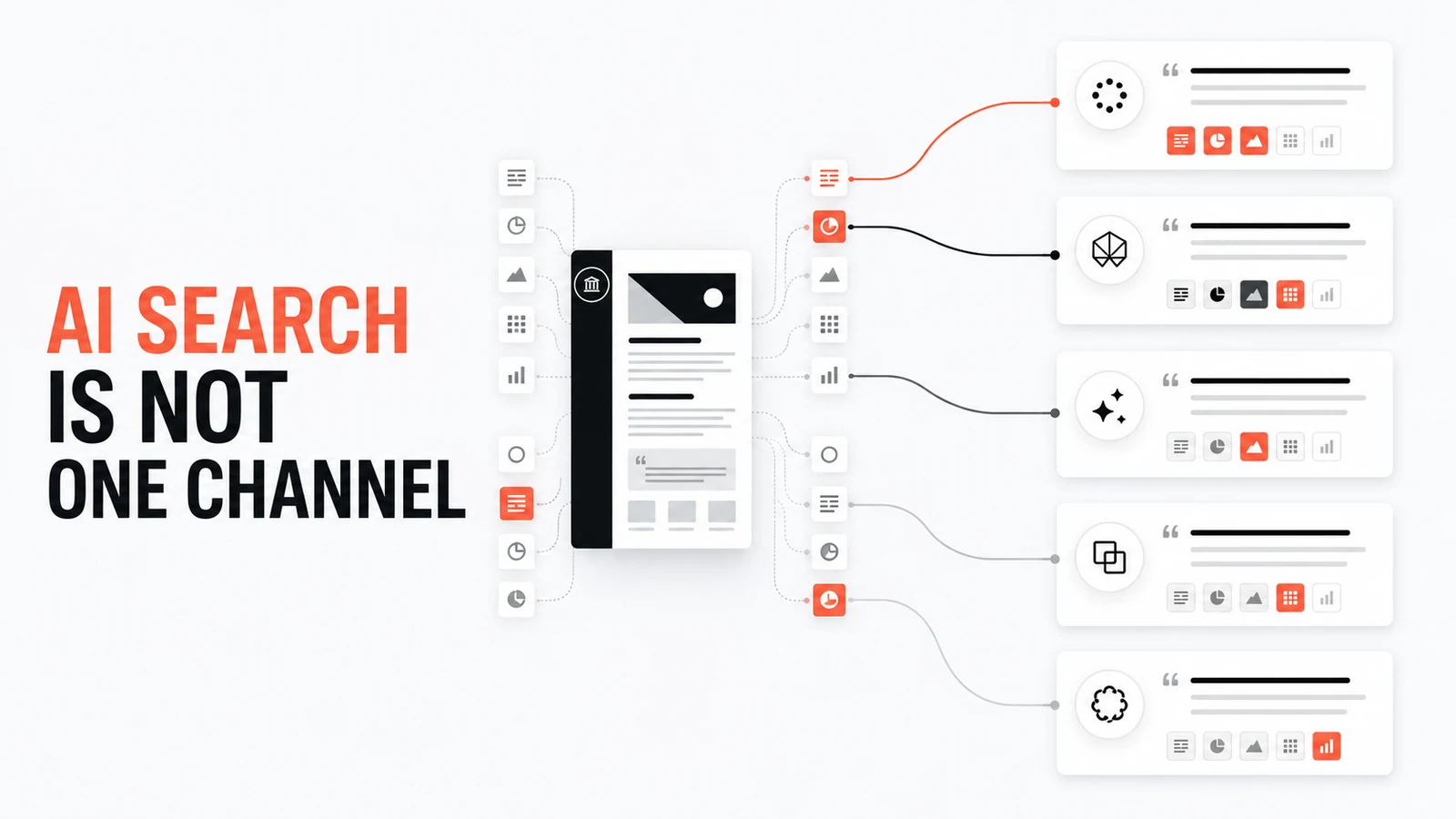
The company cannot require ChatGPT to retrieve a specific page, use a particular citation, recommend the brand or preserve the same answer across repeated prompts. It cannot assume that success in ChatGPT will transfer to Claude, Gemini, Perplexity or Google’s AI experiences.
That uncertainty changes how performance should be reported. Mentions and citations are useful observations. They should be connected to referral traffic, branded demand, qualified inquiries and sales feedback before being treated as business outcomes.
Build a clearer evidence environment
Document the facts buyers and systems need, place them on the right pages, connect related entities and maintain the external profiles that matter. Then test a stable set of important questions over time.
The goal is not to teach ChatGPT a slogan. It is to make the business easier to understand and verify across the wider discovery system. If the company is absent for important questions, diagnose why the business is not showing up in ChatGPT without assuming the same cause applies to every platform.