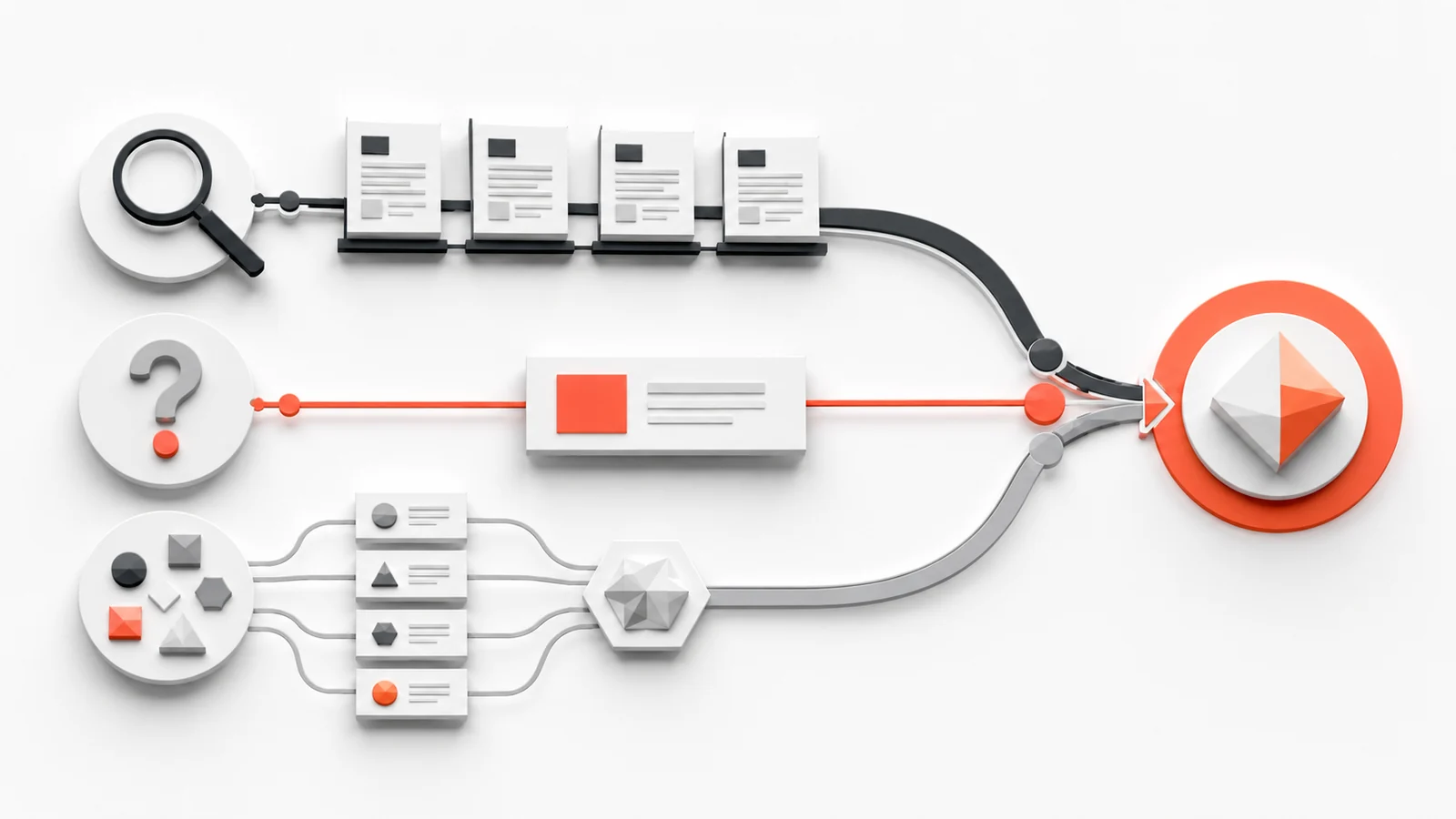
The phrase “AI visibility audit” suggests a new category of diagnosis. Some of the work is new: testing platform-specific answers, separating mentions from citations and examining which sources shape a generated response. Much of the underlying evidence remains familiar to experienced search teams.
Both audit types may uncover inaccessible pages, thin service content, weak internal links, ambiguous entities and missing authority. The difference is the interface being observed and the business decision the audit is designed to support.
What a traditional SEO audit is designed to explain
A traditional SEO audit examines whether search engines can access, interpret and rank the site’s important pages, and whether organic visibility contributes to qualified demand. Its strongest form connects technical findings to content, authority, user experience and conversion.
The deliverable should explain why priority pages underperform, which constraints affect the largest opportunities and what sequence of work is realistic. A crawl export with hundreds of warnings is not a strategy.
- Crawlability, rendering and indexation
- Information architecture, canonicals and internal links
- Search intent, page coverage and content quality
- Backlinks, authority and competitive search presence
- Organic traffic quality, landing-page behavior and conversion
- Migration, platform or governance risks
What an AI visibility audit adds
AI-generated answers introduce a different observation layer. The system may synthesize several sources, describe the business without linking to it, confuse related organizations or omit the company while recommending competitors.
The audit therefore tests representative buyer questions across relevant platforms and records whether the company is cited, mentioned, recommended or absent. It examines answer accuracy, visible sources, competitor evidence, entity consistency and variability over repeated tests.
The useful outcome is not one universal AI score. ChatGPT, Claude, Gemini, Perplexity, Google AI Overviews and Google AI Mode can behave differently, so results should remain separated by platform and question.
Where the scopes overlap
Both audits depend on accessible, coherent and credible information. A service page that is blocked from crawling cannot reliably support search visibility. A service page that says almost nothing useful is weak evidence even if it is technically accessible.
The shared foundation includes page quality, entity clarity, technical access, internal links, authorship, reviews, external authority and buyer relevance. That overlap is why a company should not fix an AI visibility problem by building a second content system disconnected from its SEO program.
Choose the audit based on the decision
A focused SEO audit may be appropriate when the problem is clearly technical or search-specific: an indexing decline, a migration, a template issue or underperformance in an established organic program.
A broader assessment is stronger when leadership sees weak brand representation, inconsistent service descriptions, competitor recommendations, reputation gaps or buyer friction across several surfaces. In that situation, the question is not only why a page does not rank. It is why the organization is harder to find, understand, trust or choose.
Use a traditional SEO audit when
- A site migration or redesign creates material search risk
- Priority pages are not indexed or have lost rankings
- Technical debt prevents the team from executing a clear strategy
- Leadership needs a focused organic search roadmap
Use a broader buyer-discovery assessment when
- The business is represented inconsistently across search and AI experiences
- Competitors are easier to understand or verify
- Reviews, website proof and third-party sources tell different stories
- Traffic exists but qualified buyers do not progress
- Leadership needs one priority plan across search, content, trust and conversion
What neither audit can guarantee
An audit can document current behavior, identify likely constraints and recommend changes. It cannot control organic rankings, AI citations, recommendations or the wording chosen by an external platform.
Good reporting separates observed facts from reasonable hypotheses. It also states where evidence is incomplete. That discipline is especially important with AI systems, where outputs can change and private retrieval logic is not fully visible.
What a decision-ready audit should deliver
The best audit is not the one with the most pages. It is the one that improves the next decision. Leadership should understand the commercial implication, the evidence behind the finding, what must change first and who needs to own it.
- Define the business scope, priority audiences and important buyer questions.
- Document the current search and AI discovery baseline.
- Identify root causes across technical access, content, entities, trust and authority.
- Compare the company with selected competitors and their supporting sources.
- Prioritize findings by impact, confidence, effort and dependency.
- Assign ownership and a practical 30-, 60- or 90-day sequence.
The stronger model connects the two
The OutsourceSy Buyer Discovery Audit uses traditional search and AI visibility as connected views of the research journey. It also examines website clarity, reviews, third-party evidence, competitors and the path from discovery to contact.
That broader scope is not necessary for every technical problem. It is useful when the organization needs to understand the entire discovery system rather than receive two disconnected issue lists.