Citation counts have become one of the easiest metrics in AI visibility reporting. They are visible, countable and comparable over time. That makes them useful — and easy to overinterpret.
Research papers and preprints released in 2026 are drawing a sharper line between source exposure, citation selection and answer-level contribution. In controlled retrieval systems, a page can be retrieved without being cited. Public consumer products generally do not expose enough of the retrieval trace to confirm that event directly.
For business leaders, the implication is simple: being cited matters, but a citation count is not the same as influence.
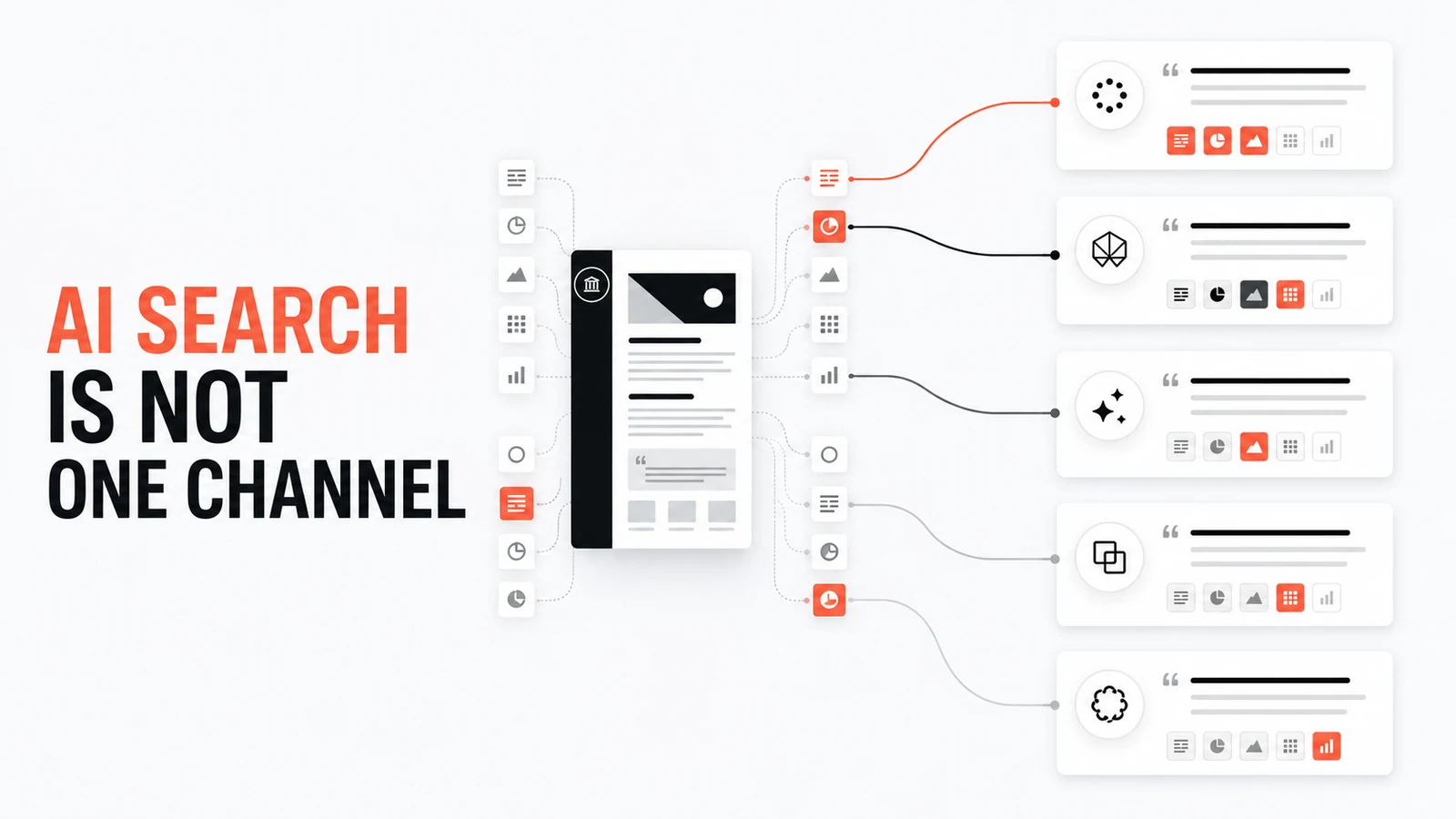
The cross-platform source analysis explains why citation sets should also remain separated by product and question.
Four different outcomes hide inside one citation dashboard
A better measurement model separates the machine event from the buyer outcome.
- Exposure: a page is crawled, retrieved or placed in the model’s working context.
- Citation: the product visibly attributes part of the response to the source.
- Answer influence: the source contributes facts, language, structure, comparisons or reasoning to the response.
- Business influence: the output changes what a buyer understands, trusts, clicks, compares or chooses.
Why a citation marker is not a causal trace
A public citation shows attribution chosen by the product. It does not expose hidden model attention, every retrieved document or a complete causal history of the generated text.
A cited page may contribute a definition, one number or a comparison. It may also be included as supplementary reading. Textual similarity can suggest contribution, but low overlap does not prove zero influence and high overlap does not establish that the page caused the final recommendation.
This is why current researchers use careful language such as citation fidelity, source suitability, causal impact and citation absorption. These terms describe different evaluation methods, not one settled universal score.
What 2026 research adds to the discussion
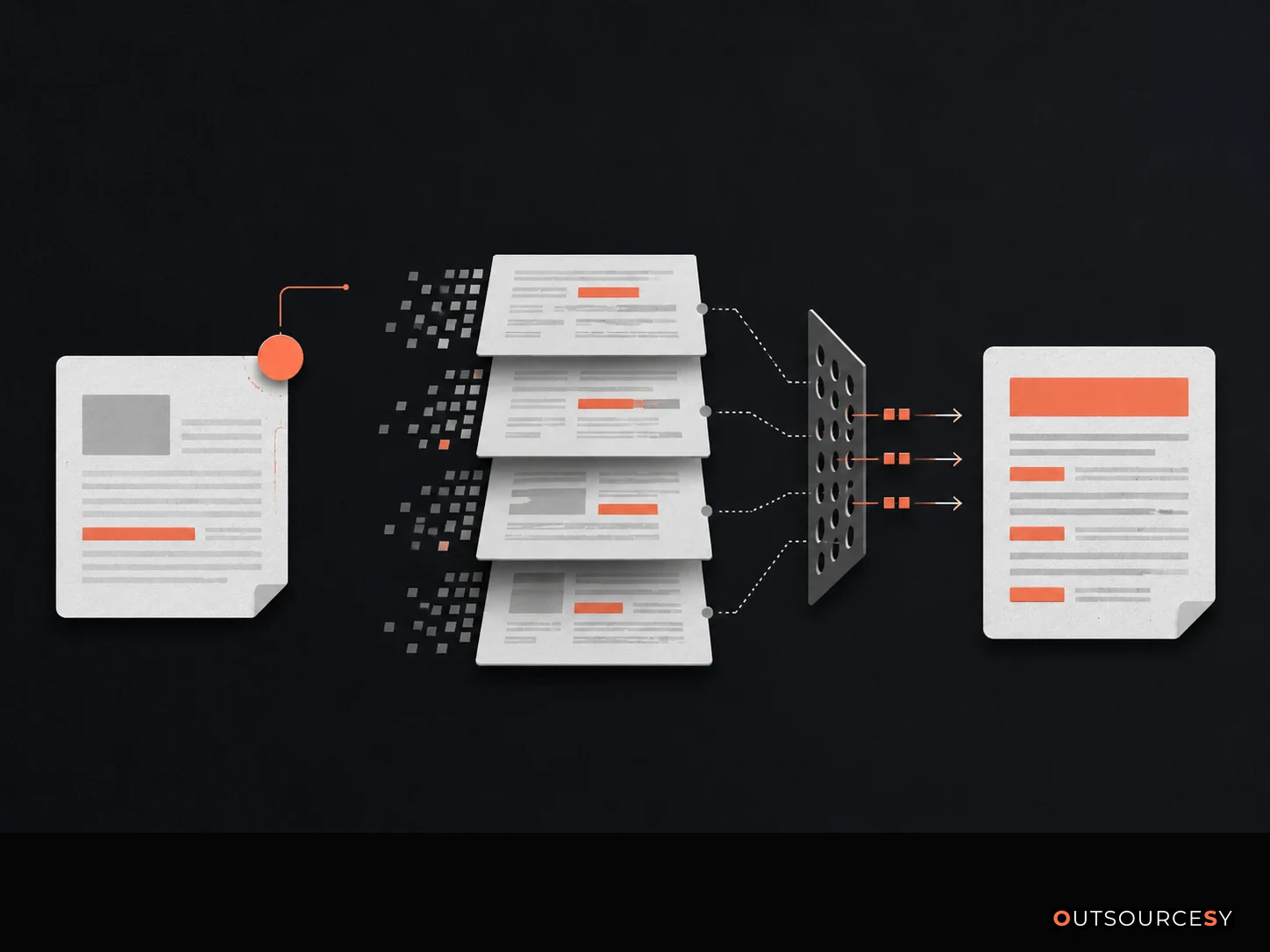
The April 2026 preprint “From Citation Selection to Citation Absorption” analyzed controlled prompts and thousands of citations across ChatGPT, Google AI experiences and Perplexity. It proposed measuring whether cited pages contribute language, evidence, structure or factual support to the answer rather than counting citations alone.
The method is useful, but its absorption score is an observational proxy built from features such as textual overlap, position and coverage. It should not be presented as direct access to a model’s hidden reasoning.
Other research has separated faithful credit from causal impact by comparing generated answers with and without a source in a controlled context. That counterfactual idea is stronger than a count, but experiments on offline systems do not automatically describe proprietary consumer products.
A real citation can still be a weak citation
Imagine an answer that cites your article for a market statistic but uses a competitor’s guide to structure the comparison and explain which provider fits each situation. Your page received a citation; the competitor’s source may have contributed more to the decision logic. A citation counter would miss that difference.
A source can exist and load correctly while remaining poorly suited to the user’s question. It may be outdated, off-topic, commercially biased or technically accurate but irrelevant to the decision being made.
Citation fidelity is another issue. The page may not support the specific statement placed beside it, or the answer may stretch a narrow source into a broad conclusion. The presence of a respected domain can make an answer feel well-supported even when the claim-to-source relationship is weak.
A responsible audit therefore examines the role and support of the citation, not merely the domain name.
- Does the source support the attached claim?
- Is it appropriate for the buyer’s question and risk level?
- Does it contribute a core fact, a comparison or only background?
- Is the company mentioned, cited, recommended or merely discussed?
- Does the result repeat across runs and platforms?
Uncited does not always mean uninfluential
Visible citations are not necessarily a complete list of every source involved. A system may use uncited context, model knowledge or intermediate retrieval results that do not appear in the final answer.
That does not mean businesses should chase invisible influence. It means analysts should avoid claiming that every uncited source had no role. Closed products rarely provide the controls required to prove that conclusion.
The practical measurement boundary is to describe what was observed, identify what can be tested and label the rest as inference.
What a stronger GEO scorecard should include
Citation frequency is one useful layer. It becomes more meaningful when combined with evidence quality and buyer response.
- Citation presence and frequency by platform and question set
- Claim support and source suitability
- Citation role: definition, fact, procedure, comparison or background
- Brand mention, description accuracy and recommendation status
- Repeatability across prompts, sessions, dates and platforms
- Owned versus third-party evidence
- Referral visits, qualified behavior and assisted conversion where measurable
How answer influence can be investigated without overstating certainty
Closed commercial systems rarely allow an analyst to remove one source while holding every other condition constant. That limits causal claims, but it does not make deeper analysis impossible.
A reviewer can map generated claims to cited passages, classify the role of each source and compare language, facts and structure. Repeated prompts can show whether the same evidence persists. Where a controlled research system is available, counterfactual tests can compare outputs with and without a document. Each method provides a different level of confidence.
The reporting language should match that confidence. ‘The page was cited for this statistic’ is an observation. ‘The page appears to contribute the comparison structure’ is an interpretation. ‘The page caused the recommendation’ requires evidence that most public dashboards do not have.
- Map each material claim to its visible source support.
- Classify the source as core evidence, comparison, background or further reading.
- Note unsupported statements and mismatched citations.
- Compare repeated outputs before describing a pattern.
- Reserve causal language for controlled evidence.
The business goal is not the citation count
A company can accumulate citations without becoming easier to choose. The cited page may answer an informational question while doing little to clarify the company’s fit, credibility or difference. Another source may shape the comparison even though the brand receives the visible link.
The stronger objective is to publish evidence that deserves to be used: clear definitions, accurate facts, useful comparisons, real expertise and transparent limitations. Then measure citation as one sign of discoverability rather than the final outcome.
AI search visibility becomes commercially relevant when it improves what qualified buyers can find, understand and verify — not when a dashboard produces a larger number in isolation.
Move beyond counts
A citation report is one piece of the diagnosis.
The Buyer Discovery Audit connects AI-answer observations with source quality, website clarity, search visibility, trust and the buyer’s path to a decision.
Explore the Buyer Discovery Audit