AI search began in the public imagination as a faster way to answer questions. The more important commercial shift is what happens after the answer.
A buyer can ask an assistant to compare options, reconcile constraints, plan a trip, research a product, identify a provider and prepare the next action. In some supported experiences, the system can open a reservation flow, prefill details or hand the buyer into a merchant checkout.
This is not universal. ChatGPT, Gemini, Claude, Perplexity and Google’s AI search features have different capabilities, markets, plans and action models. Some features are live, others limited and others still directional.
The durable implication is that AI-assisted research is moving closer to the decision. What does the system learn about your company before the buyer ever speaks to you?
The buyer journey is becoming more continuous
A conventional digital journey often moved through visible channel changes: search result, website, comparison page, review platform, contact form. AI-assisted journeys can compress several of those tasks into one conversation.
The assistant may gather evidence, explain trade-offs and refine the shortlist as the buyer adds constraints. The buyer can still open sources and visit websites, but the order of evaluation changes. A company may be excluded or misunderstood before receiving a direct visit.
That makes pre-contact clarity commercially important. The system needs enough accurate evidence to understand who the company serves, where it operates and why it fits the question.
What major platforms currently support
OpenAI’s deep research can plan and synthesize complex investigations across the web, files and connected sources. Shopping Research can compare products, constraints and trade-offs, while warning that price and inventory details may be wrong or stale. Some ChatGPT restaurant experiences can surface reservation availability and open a booking flow.
Google has described Gemini using Maps, Flights, Hotels, Search, YouTube and permitted personal context to build travel plans, compare options and begin booking flows. Google’s Universal Commerce Protocol is intended to connect discovery, purchasing and post-purchase support, but current documentation includes waitlist and roadmap language.
Anthropic says users already use Claude to research products, compare rates and recommend businesses. Its discussion of future end-to-end purchases and bookings is direction, not proof of a universal transaction system today.
The pattern is real, but uneven: research and comparison are broadly advancing; transaction and booking capabilities remain platform-, provider-, plan- and market-specific.
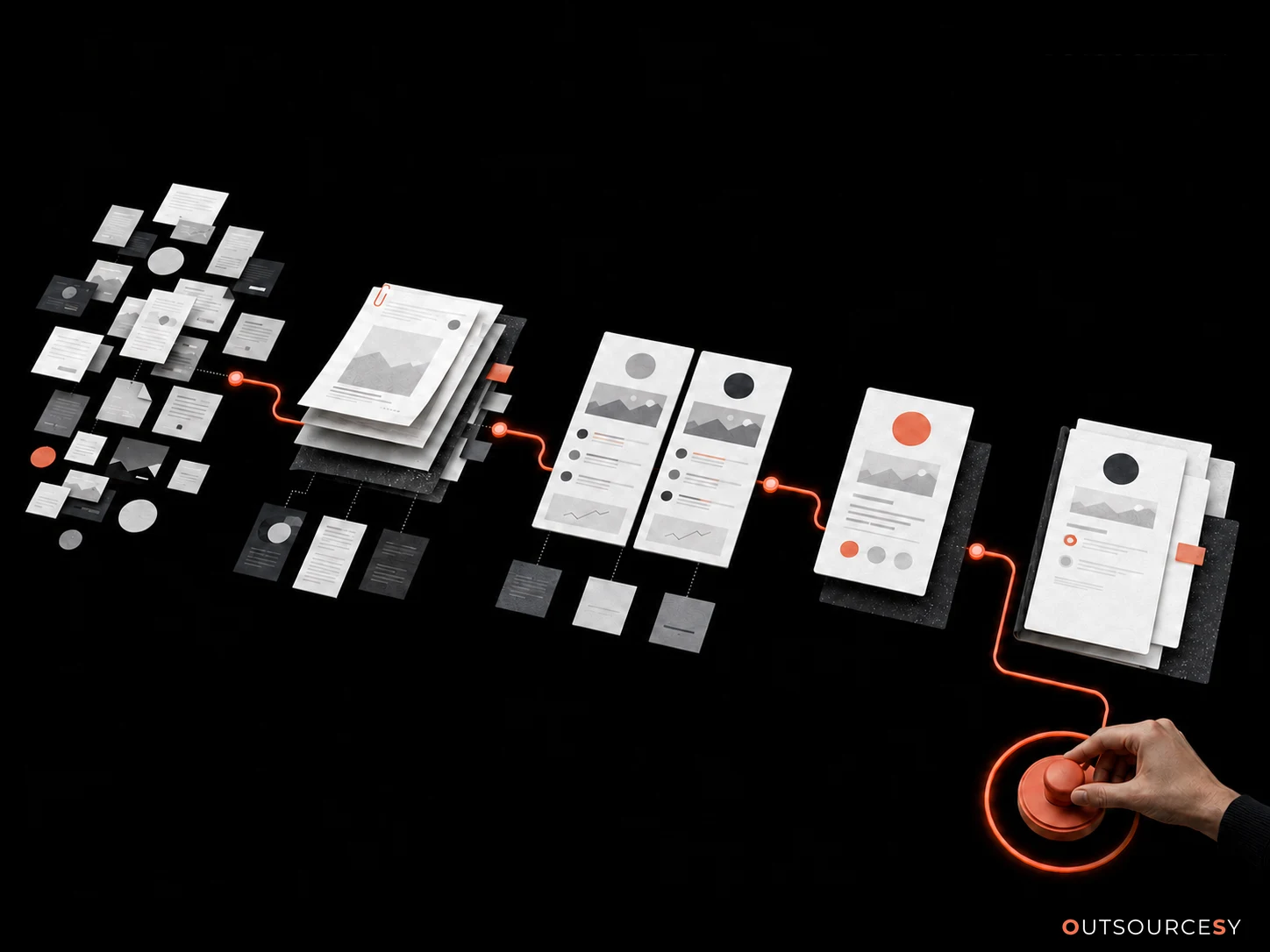
A seven-stage AI-assisted decision path
The exact interface varies, but the commercial progression can be mapped.
- Discovery: identify possible products, services or providers.
- Research: collect website, platform and third-party evidence.
- Comparison: evaluate options against the buyer’s constraints.
- Recommendation: narrow the field and explain the rationale.
- Planning: place the choice into a trip, project, workflow or budget.
- Action preparation: open a reservation, prefill details or hand off to checkout.
- Human confirmation: approve the consequential action and verify final details.
Websites are becoming evidence and action layers
The rise of decision interfaces does not make websites irrelevant. Current product documentation points in the opposite direction. Assistants rely on public pages, merchant feeds, profiles, booking providers and checkout systems to verify facts and continue actions.
A website now has at least three jobs. It provides source evidence, gives the buyer a place to verify the generated summary and supports the next step when the buyer is ready. A thin or outdated page weakens all three.
The company should not hide critical service details, availability, policies or proof inside fragile experiences. Information that affects comparison should be current, accessible and connected to the relevant entity.
The Buyer Questions Most Service Websites Fail to Answer provides a practical framework for deciding which information belongs on those pages.
What businesses need to make findable and verifiable
AI-assisted comparison depends on useful specificity because the buyer is asking the system to distinguish options.
- What the company does and does not do
- Who the company serves and the situations it handles best
- Where it operates and any service-area limits
- Current services, products, availability, policies and next steps
- Meaningful differentiators and the trade-offs behind them
- Evidence supporting important claims
- Reviews and credible third-party validation
- Credentials, authorship and accountable expertise
- Comparison-relevant details that reduce decision uncertainty
Decision support increases the cost of inconsistency
A buyer may never notice a small discrepancy when browsing one page. An assistant comparing several sources may encounter different prices, locations, service descriptions or eligibility rules. The result can be uncertainty, omission or a recommendation that favors a clearer competitor.
Consistency does not mean duplicating the same promotional paragraph everywhere. It means that the core facts and relationships agree while each source contributes appropriate detail.
Governance becomes important: someone needs ownership of source-of-truth updates across website pages, business profiles, feeds, directories and partner systems.
Measurement must extend beyond mentions
A brand mention can be useful at the discovery stage but irrelevant to the final choice. A citation may support one factual statement without placing the company on the shortlist. A prepared booking flow may create action without explaining the earlier research path.
Businesses should combine platform observations with website behavior, qualified actions, sales feedback and decision friction. The goal is to understand how evidence moves the buyer, not to credit one AI response for the entire outcome.
Repeated testing also matters. Availability, sources, personalization and product capabilities can change. A single run cannot describe the full market.
The decision interface will look different by industry
A retail journey can rely on structured product data, price, availability and merchant checkout. Travel planning may connect maps, schedules, inventory and reservation providers. A professional-service decision may depend more heavily on expertise, methodology, credentials, fit and consultation expectations.
Businesses should therefore resist copying the action model of a different category. A therapist, software platform, university and hotel do not need the same source architecture or conversion path. What matters is making the category’s decision criteria clear and verifiable.
High-consideration and regulated purchases also require stronger human safeguards. An assistant can organize evidence and narrow options, but the buyer may still need professional advice, a formal proposal, eligibility confirmation or a direct conversation before acting.
The company’s next step should respect that reality. An aggressive booking prompt can reduce trust when the buyer needs clarity. A vague ‘learn more’ link can create friction when the buyer is ready to check availability. The action layer should match the decision stage.
Be easier to find, trust and choose before the conversation
As AI systems move closer to planning and action, the quality of pre-contact evidence becomes more important. Companies need to be discoverable enough to enter the research set, clear enough to survive comparison and credible enough to justify the next step.
No optimization method can guarantee a recommendation, booking or sale. Businesses can control whether their public information is accurate, useful, accessible and supported.
That is the durable standard for an AI-assisted buyer journey: be easier to find, trust and choose.
See the journey
What does an AI-assisted buyer learn before contacting you?
The Buyer Discovery Audit follows the research path across Google, AI platforms, websites, reviews and third-party evidence to identify where qualified buyers lose clarity or confidence.
Explore the Buyer Discovery AuditSources
- Google, “How Gemini plans detailed vacation itineraries,” Aug. 6, 2026
- OpenAI Help Center, Deep research in ChatGPT, updated Aug. 1, 2026
- OpenAI Help Center, Shopping Research, updated July 30, 2026
- OpenAI Help Center, ChatGPT Search, updated Aug. 10, 2026
- Google, Universal Commerce Protocol, Jan. 11, 2026
- Anthropic, “Claude is a space to think,” Feb. 4, 2026